Modern industries are increasingly shifting toward custom industrial bridge cranes to address complex workflows, unique production constraints, and higher expectations for safety and performance. Standard lifting equipment is often insufficient for specialized environments, making customization a practical path to achieving long-term operational efficiency.
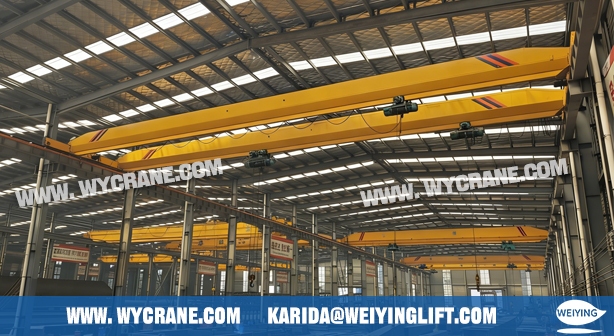
Every facility has different load characteristics, operating cycles, duty ratings, material properties, and spatial constraints. Choosing a one-size-fits-all system can lead to underperformance, accelerated wear, or even safety risks.
Customizing the lifting capacity allows manufacturers to match:
Load weight, shape, and dynamic behavior
Working frequency and duty class
Environmental challenges such as heat, dust, or chemicals
Required lifting height, span, and runway limitations
A purpose-built industrial bridge crane ensures safe lifting operations while maximizing the crane’s lifecycle value.
Steel plants operate in harsh environments with extreme heat, heavy loads, and 24/7 duty cycles. Customized bridge cranes for this sector often include:
Heat-resistant cables, motors, and controls
Heavy-duty hoists designed for molten metal handling
Specialized load handling devices such as tongs, magnets, or grabs
Adjustable speed drives for smooth load movement
These features support continuous, reliable operation while maintaining strict safety requirements.
Automotive plants demand precision, repeatability, and ergonomic performance. Tailored cranes help streamline complex assembly processes:
High positioning accuracy
Multiple lifting points for oversized components
Integration with conveyor lines and robotic systems
Smooth acceleration and deceleration to protect delicate assemblies
A customized industrial bridge crane significantly enhances plant productivity and reduces cycle times.
Industries such as cement, energy, water treatment, and large infrastructure construction often require:
Long-span bridge cranes
High lifting heights
Corrosion-resistant components
Outdoor weather protection systems
Customization ensures seamless handling of bulky, irregular, or heavy project materials.
Electronics, aerospace, chemical production, and pharmaceutical plants present unique safety and contamination challenges:
Explosion-proof controls
Anti-static components
Cleanroom-grade finishes
Precision hoisting mechanisms
A tailored solution ensures compliance with industry standards while meeting specialized handling needs.
| Category | Description |
| Enhanced Performance | • Variable frequency drives for smoother, more precise movement • High-capacity motors built for continuous and heavy-duty operation • Energy-efficient designs that lower overall power consumption |
| Specialized Components | • Custom lifting devices such as vacuum lifters, magnets, and grabs • Reinforced end trucks and girders for higher durability • High-strength wire ropes designed for long service life |
| Advanced Controls & Monitoring | • Anti-sway technology for stable and controlled lifting • Collision-avoidance systems to prevent structural impacts • Remote diagnostics and predictive maintenance sensors • Automated positioning and semi-autonomous operating capabilities |
| Structural Optimization | • Optimized girder profiles that reduce self-weight without sacrificing strength • Reinforced runways and support structures for heavy loads • Custom layout adaptations for narrow aisles, low headrooms, or restricted spaces |
These enhancements ensure the bridge crane is not only capable but also optimally engineered for its environment.
We provide a complete range of industrial bridge cranes tailored to different capacities, working environments, and application needs. Our product line includes:
Single Girder Bridge Cranes:Compact, cost-effective, and ideal for light to medium-duty lifting operations.
Double Girder Bridge Cranes:Designed for heavy loads, long spans, and demanding industrial environments requiring maximum stability.
European-Style Low-Headroom Cranes:Featuring advanced hoist technology, lightweight structure, and energy-efficient performance.
Custom Engineered Bridge Cranes:Built to match specific workflows, environmental conditions, hazardous zones, or specialized lifting requirements.
Workstation Bridge Cranes:Suitable for precision manufacturing, assembly, and high-frequency handling tasks.
We support full customization including lifting capacity, span, duty class, control systems, specialized trolleys, and smart automation features—ensuring each crane delivers optimal performance for your application.
Customized bridge cranes are engineered to match the exact workflow of the facility. This leads to faster lifting cycles, smoother load transitions, and fewer operational disruptions.
Examples include:
Matching hoisting speed to production takt time
Reducing waiting time between handling stages
Integrating with automated production lines
Enabling precise positioning to reduce rework
In environments where every second matters, a custom crane can improve total plant efficiency by a measurable margin.
When a crane is purpose-built, its design eliminates many of the hidden safety risks caused by overloading, unstable loads, or environmental hazards.
Enhanced safety benefits include:
Reduced risk of overload due to accurately matched capacity
Less load sway thanks to customized controls
Safe handling in environments involving heat, chemicals, or dust
Improved operator visibility and ergonomics
A custom industrial bridge crane creates a predictable, stable, controlled lifting environment—critical for modern industry.
A customized crane ensures the user invests in exactly the capacity, functions, and structure required—not an oversized or undersized machine.
Cost benefits include:
Reduced maintenance from minimized stress on components
Lower energy consumption due to optimized motor selection
Longer service life
Higher uptime due to durable, environment-matched components
This makes customization one of the most financially efficient long-term approaches.
Modern production requirements change rapidly.
A custom crane can be designed with:
Scalable capacity
Additional hoist options
Reserved interfaces for future automation
Modular components for easy upgrading
This flexibility protects your investment as new products, materials, or processes are introduced.
A major steel foundry needed a crane to handle molten metal ladles weighing up to 50 tons. Standard cranes had repeatedly failed due to heat stress, electrical damage, and structural deformation from constant exposure to radiant heat.
Ambient temperature often exceeded 65°C
Hot dust and slag caused rapid electrical component degradation
Critical loads required zero failure tolerance
Continuous 24/7 operations demanded exceptional durability
Heat-resistant insulated motors and cabling
Double-girder structure with thermal shielding plates
Redundant braking systems for emergency security
High-temperature bearings and reinforced trolley frames
Real-time temperature monitoring sensors integrated with automatic alarms
Crane uptime increased to 99%
Maintenance intervals extended by 40%
Thermal failures were eliminated
Overall production output improved due to smoother ladle transport
This case demonstrates how a custom industrial bridge crane directly boosts operational reliability and safety in mission-critical environments.
Creating a custom industrial bridge crane requires close collaboration between the facility owner and the crane manufacturer. The process generally follows a structured yet flexible workflow that ensures the final solution fully matches real-world production needs.
The project typically begins with an on-site inspection by the manufacturer’s engineering team. They evaluate building height, runway space, structural obstacles, workflow direction, and environmental conditions such as heat, dust, chemicals, or explosive risks. This firsthand assessment helps identify lifting challenges and ensures the design is built on accurate application data.
Both sides then work together to define key operational requirements—load weight and geometry, duty cycle, lifting height, span, travel distance, preferred speeds or ESR needs, and environmental factors. The more precise this information is, the more accurate the engineering model and component selection will be.
Manufacturers provide 2D layout plans, 3D structural models, hoist options, and electrical/control system proposals. At this stage, both parties discuss load path planning, installation feasibility, long-term serviceability, and room for future upgrades. This ensures the design is not only feasible but efficient in daily use.
Component selection becomes a collaborative decision. Teams jointly evaluate motor power, gear ratios, hoist mechanisms, girder structure, control modes, and material grades. This ensures the crane achieves the required performance while balancing cost efficiency, reliability, and maintenance needs.
Before finalizing the design, manufacturers may simulate load stresses, lifting cycles, trolley movement paths, and collision risks. These digital validations reduce design errors and ensure the crane behaves predictably under peak and continuous load conditions.
Once refinement is complete, both sides confirm detailed technical documents—material specifications, compliance standards, data sheets, maintenance requirements, and warranty terms. This guarantees that the final design meets safety, performance, and lifecycle expectations.
During installation, the manufacturer provides on-site support to assemble girders, runways, hoists, and electrical systems. Load testing, control programming, and stability verification are completed before commissioning. Final operator and maintenance training ensures the crane performs exactly as designed from day one.
Custom industrial bridge cranes are engineered solutions designed to maximize performance, safety, and operational efficiency across specialized industrial sectors. With tailored lifting capacity, advanced components, and optimized structures, a customized crane becomes an integral part of a modern production strategy—not just lifting equipment but a long-term productivity driver.
Customization is ideal when your operation involves unusual load shapes, high-duty cycles, hazardous environments, limited space, non-standard spans, high temperatures, or complex workflow requirements. If standard cranes cannot efficiently fit your working layout or safety needs, customization becomes essential.
Custom industrial bridge cranes are widely used in steel mills, metal production, automotive assembly, aerospace, chemical plants, power generation, heavy machining, and process industries. Any application with demanding or non-standard lifting tasks can benefit from customization.
While custom cranes may have a higher initial cost, they often deliver lower long-term operating costs, fewer breakdowns, improved productivity, and better compatibility with future upgrades. This makes them a cost-effective investment for demanding applications.
>Where Would You Most Likely Use an Overhead Crane?
>Overhead Crane Safety Operation Guide
>5 Ton Overhead Crane: A Comprehensive Guide to Choosing the Right Equipment
>Complete Guide to Overhead Cranes
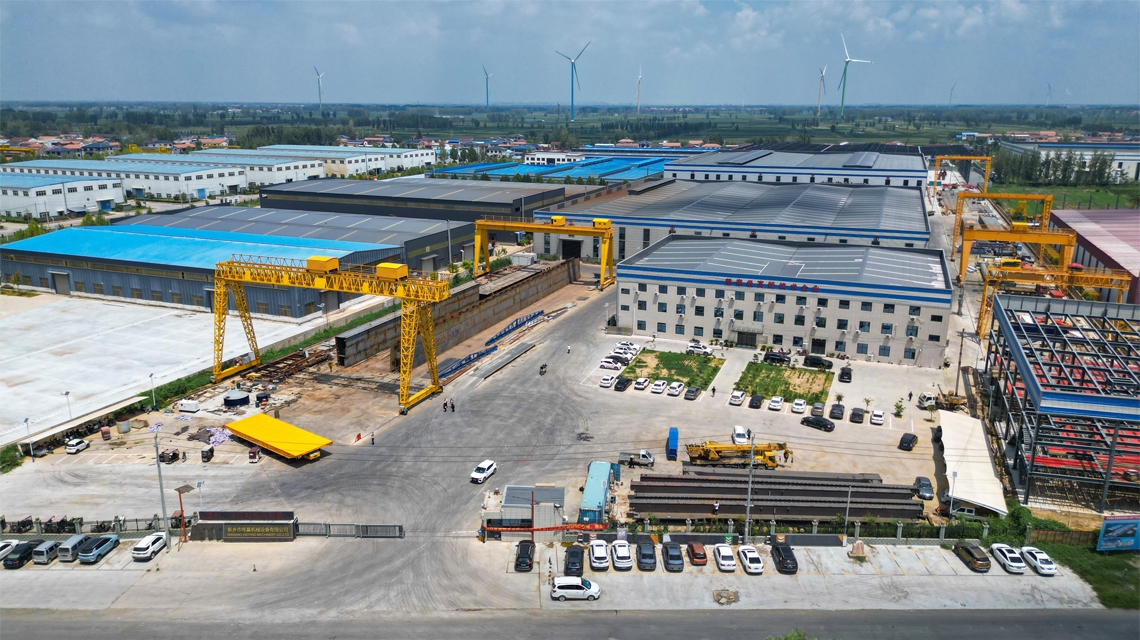
With 34 years of manufacturing experience and 12 years of export expertise, we have built a dual advantage of professional qualifications and a global presence. Our business covers more than 100 countries and regions across Asia, Europe, the Americas, Africa, and Oceania. We are certified under the ISO management system and hold CE product certifications. Our main product lines include six major series—electric hoists, electric winches, gantry cranes, bridge cranes, marine cranes, and portal cranes—comprising nearly 100 different models.
If you want to learn more, please contact us.
E-mail address: karida@weiyinglift.com
Website: www.wycrane.com