An overhead crane is not simply a lifting device—it is a critical part of industrial infrastructure that directly influences production efficiency, plant layout, and operational safety. Installed above the working area, it enables three-dimensional load movement , allowing materials to be transported quickly and precisely across the facility.
Compared with forklifts or mobile cranes, overhead cranes offer superior load capacity, better control, and uninterrupted workflow integration—especially in environments where heavy or repetitive lifting is required.
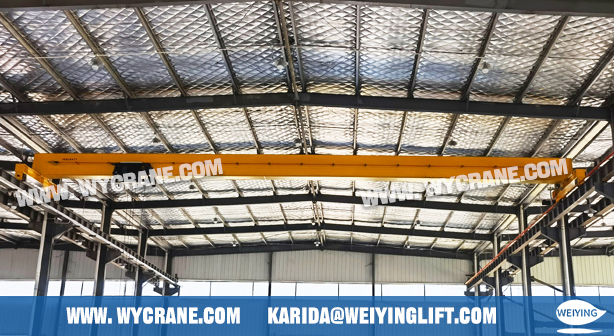
Manufacturing plants represent the most widespread use of overhead cranes, but their role goes far beyond simple lifting.
In a well-designed production environment, the crane becomes part of the process flow. For example, raw materials are unloaded, transferred to machining centers, moved to assembly stations, and finally positioned for packaging—all with minimal interruption.
This is particularly valuable in industries such as:
Machinery and equipment manufacturing
Automotive component production
Metal fabrication workshops
Operational characteristics:
Frequent lifting cycles, moderate-to-heavy loads, and high requirements for positioning accuracy define these environments. Even small inefficiencies in handling can accumulate into significant production delays.
Selection insight:
A single girder crane is often sufficient for lighter assembly work, but when production becomes continuous or involves heavier components, upgrading to a double girder system with variable speed control ensures smoother operation and longer service life.
Steel plants demand some of the most robust crane systems in the industrial world. Here, overhead cranes operate in high-temperature, high-dust, and high-intensity conditions.
They are used for:
Transporting steel coils, slabs, and billets
Feeding rolling and cutting lines
Handling semi-finished products between processes
Operational characteristics:
Loads are heavy, operations are continuous, and downtime is extremely costly. Equipment failure in such environments can halt entire production lines.
Selection insight:
Only heavy-duty double girder cranes with high working classifications (A6–A8) should be considered. In addition, heat-resistant motors, reinforced wiring, and specialized lifting tools such as C-hooks or electromagnetic lifters are essential. Under-specifying equipment in this environment often leads to accelerated wear and frequent breakdowns.
In logistics centers, the challenge is not just lifting capacity, but coverage and adaptability. Overhead cranes are particularly effective when dealing with oversized, irregular, or heavy goods that cannot be efficiently handled by forklifts.
Typical applications include:
Loading and unloading heavy cargo
Handling long materials like pipes or beams
Managing non-standard goods in storage zones
Operational characteristics:
Wide spans, variable load types, and moderate working frequency.
Selection insight:
A wide-span single girder crane equipped with remote control can significantly improve operational flexibility. Anti-sway systems are especially valuable here, as they enhance safety and speed when handling irregular loads.
Precast concrete plants require cranes that can handle heavy yet fragile components. Unlike steel, concrete elements are prone to cracking if not lifted evenly.
Applications include:
Lifting molds and precast panels
Transporting structural components
Assisting in casting and curing processes
Operational characteristics:
Heavy loads, outdoor exposure, and high precision requirements.
Selection insight:
Double girder cranes are preferred due to their superior stability. Additionally, slow-speed control and customized lifting beams help distribute load evenly, reducing the risk of damage. For outdoor operations, anti-corrosion coatings and weatherproof electrical systems are essential.
In power generation facilities, overhead cranes are not used frequently—but when they are, failure is not an option.
They are mainly used for:
Installing turbines and generators
Performing maintenance on critical equipment
Handling large mechanical components
Operational characteristics:
Low frequency, extremely high load importance, and strict safety requirements.
Selection insight:
Cranes in this environment should prioritize reliability over cost. Redundant braking systems, precise control mechanisms, and backup lowering functions are strongly recommended to ensure safe handling of critical equipment.
Overhead cranes free up valuable floor space by moving material handling operations above ground level. This allows for cleaner layouts, better workflow design, and increased usable production area.
Direct, linear movement across the workspace reduces handling time and eliminates unnecessary detours. In high-frequency operations, this translates into substantial productivity gains.
From a few tons to hundreds of tons, overhead cranes handle loads far beyond the capability of conventional equipment, making them indispensable in heavy industry.
Choosing the right overhead crane requires a systematic evaluation of real operating conditions—not just specifications on paper.
Many buyers focus on lifting capacity but ignore working frequency.
Light-duty (A3–A4): intermittent use, maintenance work
Medium-duty (A5): general manufacturing
Heavy-duty (A6–A8): continuous or harsh operations
Practical insight:
An underestimated duty cycle leads to premature wear, higher maintenance costs, and reduced equipment lifespan.
Each environment introduces unique technical requirements:
High temperature → heat-resistant components
Dust → sealed motors and control systems
Outdoor → anti-corrosion + rain protection
Humidity → enhanced electrical insulation
Ignoring environmental factors often results in hidden long-term costs.
The choice of lifting attachment directly impacts productivity and safety:
Hook → general applications
C-hook → steel coils
Electromagnet → plates and scrap
Grab bucket → bulk materials
Selecting the correct lifting device can dramatically reduce handling time and improve operational stability.
Control methods influence both efficiency and safety:
Pendant control → simple, cost-effective
Remote control → flexible and safer
Cabin control → ideal for large-scale operations
Adding variable frequency drives (VFD) ensures smoother starts and stops, reduces load swing, and extends equipment life.
Project Background:
A mid-sized machinery manufacturer faced increasing production pressure due to inefficient material handling. Heavy components (6–10 tons) were being transported using forklifts and manual coordination.
Key Challenges:
Congested workshop layout with limited movement space
Frequent delays between production stages
High safety risks due to mixed traffic (workers + forklifts)
Inconsistent positioning accuracy during assembly
Solution Implemented:
A 10-ton single girder overhead crane with an 18-meter span was installed, covering the entire production area. The system included:
Remote control operation
Variable frequency drive (VFD) for smooth movement
Optimized runway layout aligned with production flow
Results Achieved:
Material handling efficiency improved by approximately 40%
Workshop floor space was reorganized and better utilized
Reduced reliance on forklifts and manual labor
Improved safety with significantly less ground traffic
Enhanced assembly precision due to stable load positioning
Key Insight:
The most valuable improvement did not come from lifting capacity, but from workflow optimization. By integrating the crane into the production process, the company transformed its operational efficiency without expanding facility size.
From a long-term perspective, overhead cranes deliver value far beyond their initial cost:
They reduce labor dependency and operational inefficiencies
They enhance workplace safety by minimizing manual handling
They optimize plant layout and increase usable space
They provide consistent, reliable performance over many years
More importantly, a properly selected crane becomes a strategic asset—supporting production scalability and future growth.
Overhead cranes are widely used across industries, from manufacturing and steel processing to logistics and construction. Yet their true effectiveness depends on how well they are tailored to specific working conditions.
For international buyers, especially in B2B industrial sectors, understanding application scenarios, environmental factors, and selection strategies is essential. A well-matched overhead crane is not just equipment—it is a long-term investment in efficiency, safety, and operational excellence.
>5 Ton Overhead Crane: A Comprehensive Guide to Choosing the Right Equipment
>What is a double girder bridge crane?
>Which option is best for you: a top running-crane or under-running crane?
>Overhead Bridge Crane: The Difference Between Single Girder and Double Girder
1. What is the most important factor when selecting an overhead crane?
Beyond load capacity, duty cycle and working environment are the most critical factors.
2. Can one crane system serve multiple purposes?
Yes, but it may require interchangeable lifting devices or customized configurations.
3. How long does an overhead crane typically last?
With proper maintenance, 10–20 years or more depending on usage conditions.
4. Is it worth investing in advanced control systems?
Yes, features like VFD and remote control significantly improve efficiency and safety.
5. What industries benefit the most from customized cranes?
Steel, construction, marine, and heavy manufacturing industries often require tailored solutions.

With 34 years of manufacturing experience and 12 years of export expertise, we have built a dual advantage of professional qualifications and a global presence. Our business covers more than 100 countries and regions across Asia, Europe, the Americas, Africa, and Oceania. We are certified under the ISO management system and hold CE product certifications. Our main product lines include six major series—electric hoists, electric winches, gantry cranes, bridge cranes, marine cranes, and portal cranes—comprising nearly 100 different models.
If you want to learn more, please contact us.
E-mail address: karida@weiyinglift.com
Website: www.wycrane.com