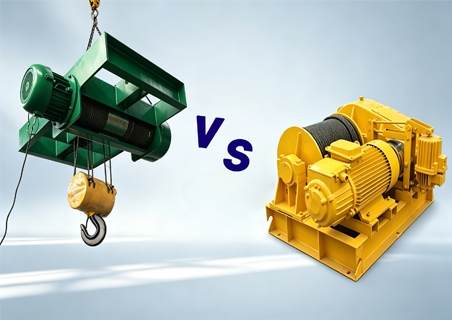
Winch vs Hoist: What Is the Difference and How to Choose?
Date:2026-08-19 View:60
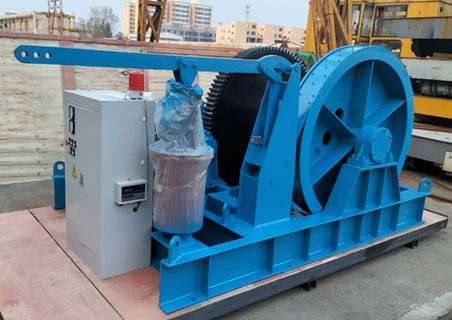
When moving or lifting heavy loads, winches and hoists are two common types of industrial equipment. Because both can use motors, gearboxes, wire ropes, drums, and braking systems, they are sometimes considered interchangeable. However, a winch and a hoist are designed for different primary purposes. A winch is mainly used to pull, haul, tow, or position a load, while a hoist is primarily designed to lift and lower suspended loads vertically. Understanding this difference is important when selecting equipment for factories, warehouses, construction sites, shipyards, docks, and other industrial applications. What Is a Winch? A winch is a mechanical device that uses a drum, rope or wire rope, and a drive system to pull or move a load. An electric winch normally consists of an electric motor, gearbox, drum, brake, wire rope, and control system. When the motor rotates the drum, the wire rope is wound onto it and generates pulling force. Depending on the application, a winch can move loads horizontally, along an incline, or in certain specially designed applications, vertically. The main purpose of a winch is therefore pulling and hauling rather than conventional lifting. Industrial winches are commonly used for: Pulling and positioning heavy equipment...