A 10 ton bridge crane is one of the most common lifting solutions used across manufacturing workshops, steel fabrication plants, logistics centers, machine repair facilities, and equipment warehouses. Because the 10–15 ton capacity range sits right at the intersection where both single girder and double girder solutions are technically feasible, many buyers struggle to determine which configuration is more suitable.
The key point is this: The correct choice does not depend on lifting capacity alone.
For a 10 ton bridge crane, the main decision-making factors are:
This expanded guide provides a detailed, technical comparison of 10 Ton Single Girder vs Double Girder Bridge Cranes, supported by real industrial case examples. It helps engineering teams, procurement managers, and plant owners make a confident and cost-effective selection.
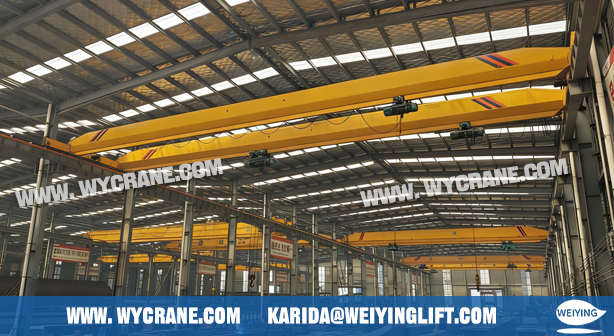 |
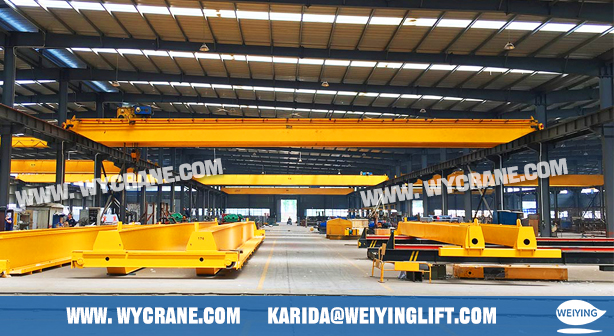 |
Single Girder (One Main Beam)
Double Girder (Two Main Beams + Trolley Hoist)
Single Girder:
Double Girder:
Case Example:
A steel structure manufacturer in Chile needed a crane system covering a 30-meter-wide workshop. A single girder would have required a reinforced beam design, which significantly increased cost and deflection risk. The engineering team switched to a double girder option, reducing deflection by 40% and increasing trolley stability during long travel operations.
Not all 10 ton applications are equal—frequency matters more than capacity.
Under continuous operation, double girder cranes provide:
Typical scenario:
Production lines, machining workshops, or facilities running multiple shifts daily.
Headroom is one of the most decisive factors when choosing between single and double girder cranes.
Single Girder:
Double Girder:
Case Example:
A mold fabrication company in Thailand needed to lift a 3.2-meter-high mold inside a building with only 6.8 meters total height. The single girder design could not meet the hook height requirement. A double girder crane delivered 680 mm additional lifting height, allowing safe vertical lifting without hitting the ceiling.
Single Girder:
Double Girder:
Case Example:
An old warehouse in Malaysia originally built for light storage operations was upgraded for machinery repair. Engineers determined the roof truss could only support limited dynamic loads. As a result, a single girder crane was chosen, saving the client more than USD 40,000 in structural reinforcement costs.
Thinking long-term can prevent costly replacements later.
If your production may evolve, a double girder crane offers greater adaptability.
Typical scenario:
Factories planning automation upgrades or handling diverse materials.
Single Girder:
Double Girder:
Single Girder:
Double Girder:
Double girder cranes can support higher speed motors and advanced control such as: VFD travel,Anti-sway system,Auto-positioning,Load display
| Feature | Single Girder | Double Girder |
| Capacity Suitability | 1–15t | 5–500t |
| Best Use in 10–15t Range | Yes | Yes (often preferred) |
| Span | Short–medium | Medium–long |
| Working Duty | A3–A5 | A5–A6 |
| Hook Height | Lower | Higher |
| Weight | Light | Heavy |
| Building Load | Low requirement | High requirement |
| Installation Cost | Low | Medium–high |
| Precision Level | Standard | High |
| Lifespan | Good | Excellent |
| Customization | Limited | Strong |
To help you make a practical decision, here’s guidance based on real working conditions:
✔ Span ≤ 26–28 m
✔ Light–medium duty operation
✔ Budget is a major concern
✔ Existing workshop structure cannot support heavy loads
✔ Standard hook lifting is sufficient
Ideal users:
✔ Span ≥ 25 m
✔ Frequent lifting or multi-shift operation
✔ Need more lifting height due to limited headroom
✔ Using custom lifting devices (magnets, grabs, beams)
✔ Need maximum stability and long-term durability
Ideal users:
1. Selecting Based Only on Capacity:Many buyers think 10 tons means “single girder is enough,” which is not always true.
2. Ignoring Span and Deflection:A single girder with long span may deflect excessively, reducing safety and stability.
3. Underestimating Required Hook Height:Failure to calculate headroom can lead to expensive modifications.
4. Overlooking Building Load Capacity:Older buildings may not support double girder cranes safely.
5. Choosing the Cheapest Quote:Short-term savings often lead to higher maintenance and lower productivity later.
6. Not Planning for Future Expansion:If you plan to add automation, special tools, or higher duty cycles, choose double girder.
A 10 ton bridge crane can be built as either a single or double girder configuration, but the correct selection depends on real working conditions—not just load capacity.
Understanding your workshop layout, structural load limits, expected operation frequency, and long-term plans will lead to the most cost-effective solution.
>5 Ton Overhead Crane: A Comprehensive Guide to Choosing the Right Equipment
>How Many Slings Can Be Attached to a Crane Hook? A Complete Professional Guide
>The Guide to Overhead Crane Operator Safety Standards
>Workstation Bridge Crane: The Complete Guide for Buyers
Both options are feasible for 10–15 ton capacities. A single girder is better for short spans, light–medium duty, and budget-friendly installations. A double girder is ideal for long spans, high lifting height, and frequent operation.
Yes—single girder cranes are suitable for buildings with limited load capacity. They have lower wheel loads and require less reinforcement compared to double girders.
In most cases, no, because the supporting runway beams and columns must be designed from the beginning for double girder loads. Choosing the correct type upfront avoids costly reconstruction.

With 34 years of manufacturing experience and 12 years of export expertise, we have built a dual advantage of professional qualifications and a global presence. Our business covers more than 100 countries and regions across Asia, Europe, the Americas, Africa, and Oceania. We are certified under the ISO management system and hold CE product certifications. Our main product lines include six major series—electric hoists, electric winches, gantry cranes, bridge cranes, marine cranes, and portal cranes—comprising nearly 100 different models.
If you want to learn more, please contact us.
E-mail address: info@weiyinglift.com
Website: www.wycrane.com