As industrial facilities continue to seek higher efficiency, improved safety, and reliable lifting solutions, the double girder bridge crane has become one of the most preferred options for heavy-duty operations. Compared with other lifting systems, it delivers stronger performance, longer service life, and more adaptable configurations, making it widely used in manufacturing, steel processing, logistics, energy, construction, mining, and many other demanding sectors.
This article explains the key advantages, applications, comparisons, and real customer cases, providing a full insight into why a double girder bridge crane is the ideal choice for heavy lifting environments.
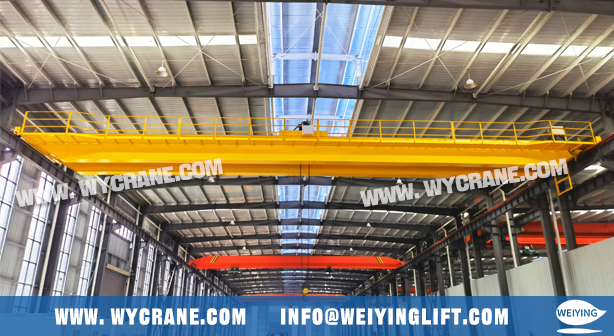
The most significant benefit of a double girder design is its exceptional load-bearing capability.
With two main girders supporting the hoist and trolley, these cranes can handle:
This makes the double girder bridge crane the preferred solution for applications such as steel melting shops, heavy fabrication workshops, machinery assembly, and foundries where large and bulky materials must be lifted safely and efficiently.
The double-girder structure provides greater stability under high loads, reducing deflection and vibration even during long travel cycles. This stability results in:
Additionally, these cranes are typically equipped with advanced safety features, including overload protection, emergency stop systems, limit switches, rail guards, and anti-collision systems. Together, these elements ensure consistent and reliable performance in high-intensity working environments.
For industries that require precise handling, a double girder bridge crane offers unmatched control. Its strong mechanical structure can support:
Whether lifting delicate equipment or maneuvering oversized components, operators gain more flexibility and accuracy, improving overall productivity.
The robust framework, combined with high-quality steel and advanced welding technology, gives double girder cranes a longer lifespan and lower maintenance cost compared to lighter lifting equipment.
Key durability benefits include:
Though the initial investment may be slightly higher than a single girder crane, the long-term returns—longer lifespan, fewer shutdowns, and better operational efficiency—make a double girder bridge crane a cost-effective choice for most industrial facilities.
Double girder cranes comply with major international standards including ISO, FEM, and CMAA, ensuring the equipment meets global safety and quality requirements.
They also support extensive customization options:
This scalability allows businesses to upgrade equipment easily as their production needs evolve.
A double girder bridge crane is engineered for heavy-duty industrial operations where reliability and lifting power are critical. Common applications include:
Used for handling steel plates, coils, billets, and casting equipment, ensuring efficient and safe load movement.
Ideal for transporting large mechanical components, machine beds, industrial molds, and assembly parts.
Employed in maintenance of large equipment, lifting of mining tools, and handling of power plant components.
Supports material handling in prefabrication plants, concrete production workshops, and bridge-building facilities.
Ensures efficient handling of oversized cargo or bulk materials that exceed the capability of single girder or mobile cranes.
In all these cases, double girder cranes ensure continuous heavy lifting, improved efficiency, and reduced downtime.
When choosing lifting equipment, businesses often compare a double girder bridge crane with single girder cranes, gantry cranes, and jib cranes. The differences are clear:
| Feature | Double Girder | Single Girder |
| Load Capacity | Much higher (10–200+ tons) | Low to medium (1–20 tons) |
| Lifting Height | Higher | Limited |
| Rigidity | Excellent | Moderate |
| Cost | Higher | Lower |
| Best For | Heavy-duty operations | Light–medium duty |
A double girder bridge crane often provides better long-term stability and lower operational costs for fixed indoor production lines.
Thus, for a heavy-duty, repeat-use industrial process, the double girder bridge crane remains the most reliable choice.
A steel structure manufacturer faced challenges handling long and heavy H-beams, with weights exceeding 40 tons and lengths over 30 meters. Their existing lifting equipment lacked both capacity and stability, leading to inefficiencies and safety concerns.
Solution:
A customized 50-ton double girder bridge crane with optimized span design and variable frequency control was installed.
Results:
This case highlights how the right crane configuration can directly impact productivity and operational safety.
A double girder bridge crane offers unmatched advantages in strength, stability, precision, and long-term cost performance. For operations requiring consistent heavy lifting, high safety standards, and long service life, it is by far the most reliable and future-proof investment.
Whether you operate in steel fabrication, machinery production, mining, or logistics, a well-designed double girder crane ensures higher productivity, safer operations, and greater operational efficiency.
If you need a custom solution—non-standard spans, special environments, automation, or high-duty lifting—our engineering team can design a system tailored to your exact working conditions.
>5 Ton Overhead Crane: A Comprehensive Guide to Choosing the Right Equipment
>Understanding Overhead Bridge Crane Load Capacity and Why It Matters
>How to Choose a Suitable Supplier for Your Overhead Bridge Crane
>Shop Overhead Crane: How to Choose the Right Crane for Your Workshop
A double girder bridge crane is an overhead lifting system with two main girders supporting the hoist and trolley. This structure provides higher load capacity, greater stability, and increased lifting height compared to single girder cranes, making it ideal for heavy-duty industrial applications.
A double girder crane offers:
While a single girder crane is more economical for light to medium lifting, a double girder is better suited for heavy-duty tasks.
To provide an accurate offer, suppliers usually require:

With 34 years of manufacturing experience and 12 years of export expertise, we have built a dual advantage of professional qualifications and a global presence. Our business covers more than 100 countries and regions across Asia, Europe, the Americas, Africa, and Oceania. We are certified under the ISO management system and hold CE product certifications. Our main product lines include six major series—electric hoists, electric winches, gantry cranes, bridge cranes, marine cranes, and portal cranes—comprising nearly 100 different models.
If you want to learn more, please contact us.
E-mail address: info@weiyinglift.com
Website: www.wycrane.com