When planning outdoor lifting operations, two major crane systems are commonly considered: outdoor overhead cranes (also called bridge cranes) and gantry cranes. Both systems are widely used in manufacturing yards, logistics terminals, construction sites, steel yards, precast yards, and open-air warehouses.
However, buyers often ask the same question: Which one is more economical?
The answer depends on your site conditions, lifting frequency, mobility needs, and long-term cost expectations.
This article provides a clear comparison from a cost-efficiency perspective and helps you determine which crane type fits your project best.
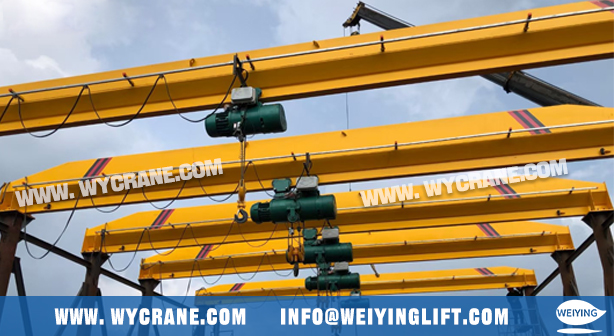
Outdoor overhead cranes run on elevated runways and are commonly adopted in large industrial yards. Several mainstream structures exist, each serving different operational goals:
A lightweight yet efficient option for outdoor handling tasks.
A heavy-duty workhorse for large-scale outdoor industries.
A modern, energy-efficient upgrade to traditional designs.
Outdoor overhead cranes excel in continuous production, long-term installation, and heavy-duty performance.
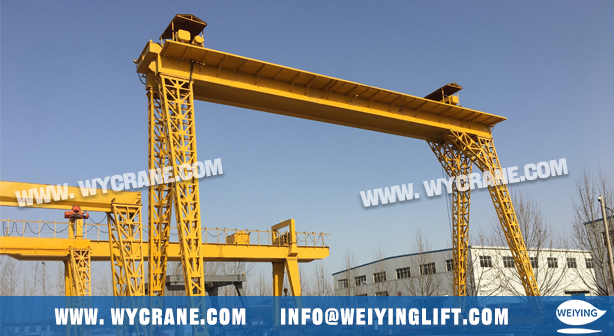
Gantry cranes are characterized by their ground-supported structure. Because they don’t rely on existing buildings, they are one of the most flexible outdoor lifting solutions.
The classic gantry structure with legs on both sides.
A hybrid design combining a leg on one side and a runway beam on the other.
A highly mobile crane with rubber tires instead of rail tracks.
A compact, low-cost, movable structure used for small lifting jobs.
Gantry cranes shine in flexibility, temporary use, moveability, and budget-conscious projects.
To determine which system is more economical, we analyze the cost from multiple dimensions.
| Cost Factor | Gantry Crane | Outdoor Overhead Crane |
| Equipment Cost | Generally lower because no structural runways are required | Higher, especially for double-girder systems |
| Civil Work | Requires ground rails or no rails (mobile models) | Requires support columns, elevated tracks, and foundations |
| Installation Cost | Faster to install, simpler site preparation | Higher installation labor due to structural complexity |
Conclusion:
Gantry cranes usually have a lower initial investment.
Overhead cranes become more economical only when integrated into an existing structure or for very high-load long-span designs.
| Operating Factor | Gantry Crane | Outdoor Overhead Crane |
| Energy Consumption | Higher due to wheel friction and heavier structure | More energy-efficient because the system is lighter |
| Maintenance | Exposed running mechanisms require regular checks | More durable design, usually lower long-term maintenance |
| Durability | Good, but depends heavily on ground condition | Excellent long-term stability in heavy production environments |
Conclusion:
Outdoor overhead cranes typically cost less to operate and maintain, especially for long-term and high-frequency lifting operations.
| Mobility Factor | Gantry Crane | Outdoor Overhead Crane |
| Mobility | Excellent (especially RTG and portable types) | Fixed installation, no flexibility |
| Relocation | Easy to dismantle and reinstall | Difficult and costly |
| Adaptability | Very suitable for changing locations | Best for permanent facilities |
Conclusion:
Gantry cranes provide far higher mobility, making them more economical for temporary or multi-location operations.
Why?
Because overhead cranes offer long service life, high reliability, and superior performance under continuous heavy loads. In contrast, gantry cranes shine in temporary setups or projects requiring flexible movement.
Gantry cranes become the better financial choice in the following scenarios:
If your site is an open space without structural support, such as:
A gantry crane avoids all overhead structural investment.
For projects such as:
A gantry crane is far more cost-effective since it can be relocated and reused.
If your lifting capacity needs fall under 1–50 tons, gantry cranes offer:
Mobile gantry cranes and rubber-tired gantry cranes provide:
For businesses with limited capital expenditure, a gantry crane provides:
In short:
Gantry cranes offer a lower entry cost and greater flexibility, ideal for temporary, flexible, and budget-sensitive projects.
There are many situations where an overhead crane provides better long-term value.
Industries with nonstop lifting cycles benefit from overhead cranes:
Ideal for steel factories, mining, precast plants, and heavy production yards.
If the crane is expected to operate for 10–20+ years in a fixed location, the overhead crane’s:
make it the more economical choice.
Outdoor overhead cranes can be equipped with:
These features ensure reliability under:
Because overhead cranes operate above ground:
This makes overhead cranes more economical for space-limited facilities.
In short:
Outdoor overhead cranes are the better long-term investment for heavy, frequent, and permanent lifting operations.
| Comparison Item | Gantry Crane | Outdoor Overhead Crane |
| Initial Cost | Lower | Higher |
| Installation | Fast, minimal civil work | Complex, requires structures |
| Best For | Temporary projects, flexible yards | Permanent production, heavy duty |
| Mobility | Excellent | None |
| Space Utilization | Occupies ground area | Saves ground space |
| Long-Term Cost | Higher maintenance | Lower maintenance |
| Weather Resistance | Good | Very good |
The most economical solution depends on your project type:
For most short-term or medium-duty outdoor situations, gantry cranes provide the best cost advantage.
For long-term, continuous, and heavy industrial use, outdoor overhead cranes deliver greater economic value over time.
>5 Ton Overhead Crane: A Comprehensive Guide to Choosing the Right Equipment
>How Many Slings Can Be Attached to a Crane Hook? A Complete Professional Guide
>Shop Overhead Crane: How to Choose the Right Crane for Your Workshop
A gantry crane is usually more economical for temporary projects, flexible work sites, and locations without existing building structures. An outdoor overhead crane becomes more economical for long-term, heavy-duty, and high-frequency operations.
Choose an outdoor overhead crane when you need:
Yes. Gantry cranes have lower upfront cost, simpler installation, and minimal site requirements, which makes them a cost-effective option for small and medium-sized businesses.

With 34 years of manufacturing experience and 12 years of export expertise, we have built a dual advantage of professional qualifications and a global presence. Our business covers more than 100 countries and regions across Asia, Europe, the Americas, Africa, and Oceania. We are certified under the ISO management system and hold CE product certifications. Our main product lines include six major series—electric hoists, electric winches, gantry cranes, bridge cranes, marine cranes, and portal cranes—comprising nearly 100 different models.
If you want to learn more, please contact us.
E-mail address: info@weiyinglift.com
Website: www.wycrane.com