In industrial environments where overhead cranes are widely used, working at height is often unavoidable. Whether during installation, inspection, or maintenance, personnel are frequently exposed to elevated positions that carry significant fall risks.
Unlike general height-related work, crane environments introduce additional hazards due to moving structures, dynamic loads, and complex mechanical interactions. This makes fall protection not only necessary, but technically demanding.
This article provides a structured and in-depth analysis of fall protection in crane operations, focusing on real hazards, regulatory-compliant practices, and safer engineered alternatives.
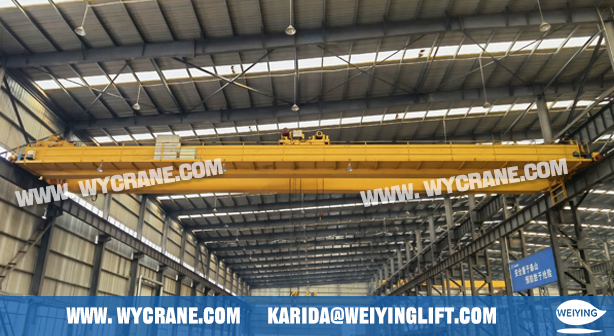
Crane-related fall risks typically occur in scenarios such as runway inspections, girder maintenance, and installation of electrical or mechanical components. These tasks are often performed at heights ranging from several meters to over ten meters, with limited physical barriers.
What makes crane environments uniquely dangerous is not just the height, but the combination of elevation and mechanical activity. Workers are not standing on stable, enclosed platforms—they are often positioned on narrow steel beams or transitional structures.
Even a minor loss of footing in such environments can immediately escalate into a life-threatening situation. Unlike ground-level hazards, there is no margin for error.
Overhead cranes are not static structures. Even when not actively lifting loads, they may be subject to:
Residual movement
Vibration from nearby operations
Structural deflection
When a worker is positioned on or near these structures, even slight movement can disrupt balance. This creates a scenario where external forces, not just human error, contribute to fall risk.
This is a key reason why conventional fall protection assumptions do not always apply in crane environments.
Falls from crane structures are rarely minor incidents. The height involved, combined with hard industrial surfaces below, often leads to:
Fatal injuries
Permanent disability
Severe trauma
From a safety management perspective, fall protection is not simply about reducing risk—it is about preventing irreversible outcomes.
Crane runways and girders are essential for system operation but are not designed for safe human access. Workers performing inspections or maintenance often face:
Narrow walking surfaces
Absence of guardrails
Limited anchorage options
In many facilities, these areas were not originally designed with fall protection systems in mind, increasing reliance on temporary or improvised solutions.
One of the most dangerous moments occurs when workers transition between different structures, such as:
Ladder to beam
Platform to crane girder
Scaffold to structural steel
During these transitions, workers may briefly lose three-point contact or stable footing. Without proper fall arrest systems, this short moment can result in a fall.
A recurring issue in industrial environments is the misuse of crane components as anchorage points. Workers may attach harnesses to:
Hooks
Wire ropes
Hoist assemblies
While these components appear strong, they are not designed for fall arrest dynamics, which involve sudden shock loads and multi-directional forces.
Even when a crane is intended to be idle, lack of proper control measures can lead to unexpected motion. This may occur due to:
Operator miscommunication
Absence of lockout/tagout procedures
System testing or partial activation
Any movement can compromise both worker balance and the effectiveness of attached fall protection systems.
A fatal case investigated by the Occupational Safety and Health Administration clearly demonstrates the risks involved.
A maintenance worker performing elevated inspection work attached his personal fall arrest system directly to a crane hook, assuming it would provide a secure anchorage point. However, the crane system was not fully isolated. During the operation, slight movement occurred in the hoisting mechanism.
This movement caused a shift in the anchorage position, leading to loss of balance. The fall protection system failed to function as intended because the anchorage point itself was unstable.
The investigation identified multiple failures:
Anchorage point not engineered for fall arrest
No lockout/tagout applied
Lack of coordination between personnel
Absence of a dedicated fall protection system
This case reinforces a critical principle:
structural strength does not equal fall protection suitability.
Technically, yes—but only under highly controlled and regulated conditions.
In practice, using an overhead crane as a fall protection anchorage point is:
Allowed in limited construction scenarios
Rare and discouraged in general industrial environments
However, feasibility does not equal suitability. In practice, this method introduces multiple layers of risk:
Dependence on operational control
Potential for human error
Unpredictable load paths
As a result, most industrial safety professionals consider this approach a controlled exception rather than a recommended solution.
The reason lies in engineering differences:
| Function | Crane System | Fall Protection System |
| Design purpose | Lift loads | Arrest human falls |
| Load behavior | Static/dynamic vertical loads | Sudden shock loads |
| Safety factor | Based on material handling | Based on human survival |
A crane may handle several tons of load, but that does not automatically make it suitable for fall arrest, which involves high-impact dynamic forces.
When a crane must be used as part of a fall protection system, requirements outlined by the Occupational Safety and Health Administration must be fully integrated into operational practices:
https://www.osha.gov/laws-regs/regulations/standardnumber/1926/1926.1423
A qualified person must conduct a detailed evaluation of the crane system, ensuring that:
The rated capacity includes all components (hook, rope, rigging)
The structure can withstand fall arrest forces
The configuration is appropriate for use as an anchorage
This is not a simple visual check—it requires engineering judgment and understanding of dynamic loading.
One of the most critical requirements is that the crane must remain completely stationary during use as an anchorage point.
This involves:
Full lockout/tagout procedures
Disabling all motion controls
Clear communication across teams
Even minor unintended movement can compromise the entire fall protection system.
The fall protection system must be completely independent from lifting operations. This means:
No shared load paths with lifting slings
No connection to active hoisting components
Dedicated anchorage connection
This separation ensures that lifting activities do not interfere with personal safety systems.
Additional considerations include:
Avoiding side loading or pendulum effects
Ensuring sufficient fall clearance distance
Verifying anchorage strength meets required standards (typically 5,000 lbs per worker)
These factors are often overlooked but are critical for real-world safety performance.
SRLs improve both safety and usability by:
Automatically adjusting to worker movement
Locking instantly during a fall
Reducing impact forces on the body
They are particularly suitable for crane maintenance scenarios.
Wherever possible, passive protection methods such as:
Guardrails
Enclosed platforms
Walkways
should be prioritized. These solutions eliminate reliance on human behavior and reduce the need for personal protective equipment.
Fall protection in crane operations requires more than awareness—it requires correct system selection, proper engineering validation, and strict operational control.
While overhead cranes can be used as anchorage points under tightly regulated conditions defined by the
Occupational Safety and Health Administration, this approach carries inherent risks and operational limitations.
A safer and more professional strategy is to implement dedicated fall protection systems that are specifically designed for human safety.
In industrial environments where precision and reliability are essential, safety systems should never be improvised. Choosing the right fall protection solution is not just about compliance—it is about protecting lives.
>Bridge Crane Safety: Core Operating Rules and Risk Prevention Strategies
>The Guide to Overhead Crane Operator Safety Standards
>How Many Slings Can Be Attached to a Crane Hook? A Complete Professional Guide
>5 Ton Overhead Crane: A Comprehensive Guide to Choosing the Right Equipment
>Overhead Crane Anti-Swing System: How Does It Reduce Accidents and Improve Efficiency?
Yes, but only under strict conditions defined by the Occupational Safety and Health Administration. The crane must be stationary, properly evaluated by a qualified person, and used independently from lifting operations. In most industrial environments, this practice is not recommended due to safety risks.
Although a crane hook is designed to lift heavy loads, it is not engineered to withstand the dynamic shock forces generated during a fall. Improper use may lead to instability, movement, or failure of the fall arrest system.
No. While it may be permitted in certain construction scenarios, it is rarely used in general industry because it introduces unnecessary risk and complicates safety management.

With 34 years of manufacturing experience and 12 years of export expertise, we have built a dual advantage of professional qualifications and a global presence. Our business covers more than 100 countries and regions across Asia, Europe, the Americas, Africa, and Oceania. We are certified under the ISO management system and hold CE product certifications. Our main product lines include six major series—electric hoists, electric winches, gantry cranes, bridge cranes, marine cranes, and portal cranes—comprising nearly 100 different models.
If you want to learn more, please contact us.
E-mail address: karida@weiyinglift.com
Website: www.wycrane.com