In industrial environments, cranes are essential equipment for lifting and moving heavy materials efficiently. However, every lifting operation involves potential risks, especially when handling suspended loads.
Whether using an overhead crane, gantry crane, jib crane, or electric hoist, a small mistake during lifting can result in load drops, equipment damage, or serious injuries.
The 3-3-3 rule for cranes is a practical lifting safety method used by many crane operators and safety professionals to verify load stability before moving a suspended load.
The rule provides a simple three-step approach:
The purpose of the 3-3-3 rule is to identify potential problems before the load is fully lifted and transported.
Although the 3-3-3 rule is not an official OSHA regulation, its principles support many important crane safety practices, including proper inspection, safe load handling, and preventing exposure to suspended load hazards.
The 3-3-3 rule focuses on the most critical moment of a lifting operation: when the load first leaves the ground.
During this moment, operators can identify problems that may not be visible before lifting, such as:
By following the three steps of the rule, crane operators create an additional safety checkpoint before continuing the lifting process.
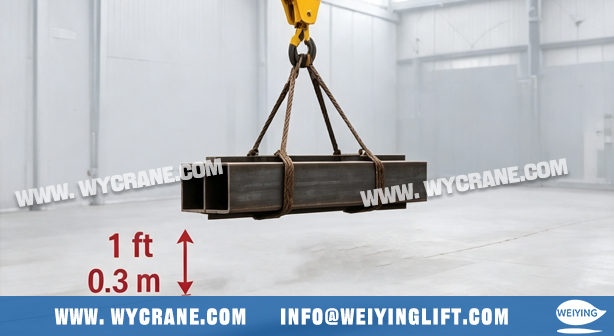
The first step of the crane 3-3-3 rule is to perform a controlled initial lift.
The operator should slowly raise the load approximately 1 foot (0.3 meters) from the ground.
This small lifting distance allows the operator and rigging team to verify several important conditions.
Once the load is slightly off the ground, operators should confirm:
An unstable load may tilt, rotate, or suddenly shift when moved higher.
For example, when using an overhead crane to lift steel plates, improper sling positioning may cause the load to become uneven immediately after leaving the floor.
The initial lift allows workers to inspect:
Operators should confirm:
Many lifting accidents occur because problems with rigging are discovered only after the load has already been lifted too high.
The initial lift also tests whether the crane can safely hold the load.
The operator should observe:
This is especially important for heavy-duty equipment such as:
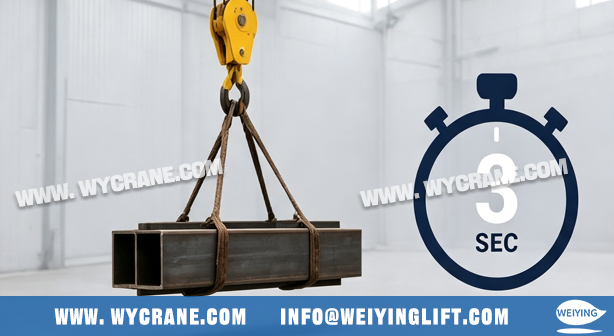
After the load is lifted slightly from the ground, the operator should stop the lifting motion and hold the load for approximately 3 seconds.
This short pause is an important safety verification step.
During this period, operators can observe whether:
If any abnormal condition appears, the operator can lower the load safely and correct the problem before continuing.
One major reason for using the 3-second hold is to reduce the risk of shock loading.
Shock loading occurs when a crane experiences a sudden increase in force caused by:
Shock loading can create forces much higher than the actual load weight.
Potential consequences include:
A controlled initial lift and short pause help reduce these risks.
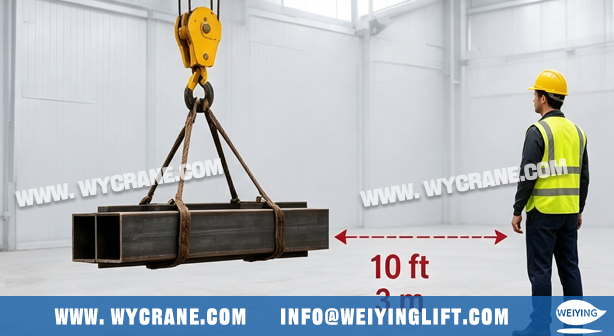
The third part of the 3-3-3 rule focuses on protecting workers around the lifting area.
Personnel should maintain a safe distance of approximately:
10 feet (3 meters) from suspended loads
and should never stand directly underneath a lifted load.
Even properly rigged loads can move unexpectedly.
A suspended load may:
Maintaining distance reduces the possibility of:
During crane operations:
✔ Stay outside the lifting zone
✔ Avoid standing below suspended loads
✔ Follow instructions from the signal person
✔ Use tag lines when necessary
✔ Maintain communication with the crane operator
✘ Walk under a suspended load
✘ Place hands between moving materials
✘ Stand between a load and fixed structures
✘ Enter restricted lifting areas without permission
The 3-3-3 rule is effective because it addresses several common causes of crane accidents.
Many lifting failures happen immediately after the load leaves the ground.
The initial lift allows operators to discover:
before the load reaches a dangerous height.
Sudden loading creates additional stress on crane components.
Following the 3-3-3 procedure helps protect:
This can extend equipment service life and reduce maintenance costs.
The rule encourages operators to avoid rushing.
A safe crane operator should always:
Good safety habits are essential for reliable crane operation.
“Is the 3-3-3 Rule Required by OSHA?″
No. OSHA does not specifically require the 3-3-3 rule for cranes. However, this practical lifting method supports OSHA’s requirements for equipment inspection, safe load handling, qualified operators, and suspended load hazard prevention.
For companies operating overhead cranes, gantry cranes, and other industrial lifting equipment, following OSHA crane safety requirements helps reduce risks associated with suspended loads, equipment failure, and workplace accidents.
The main OSHA requirements related to crane lifting safety include the following:
Before operating a crane, employers must ensure that equipment is inspected properly to identify any conditions that could affect safe operation.
According to OSHA 29 CFR 1910.179(j) – Inspection, overhead and gantry cranes must receive regular inspections, including checking critical components such as:
Regular inspection helps identify problems before they cause equipment failure.
For example:
Following the first step of the 3-3-3 rule — lifting the load slightly before full operation — provides an additional opportunity to verify load stability after inspection.
OSHA requires cranes to be operated within their rated capacity.
According to OSHA 29 CFR 1910.179(b)(5):
“The rated load of the crane shall be plainly marked on each side of the crane.”
Operators must understand:
Overloading a crane can lead to:
Before lifting, operators should always confirm that the total load does not exceed the crane’s rated capacity.
Safe crane operation depends heavily on operator knowledge and training.
OSHA 29 CFR 1926.1428 requires employers to ensure that crane operators are competent and capable of operating equipment safely.
Operators should understand:
For lifting operations where the operator cannot clearly see the load path, proper communication with signal persons is essential.
Clear communication helps prevent:
One of the most important principles in crane safety is preventing workers from being exposed to suspended load hazards.
OSHA emphasizes that employees should avoid unsafe positions around loads being lifted.
Workers should:
✔ Stay clear of suspended loads
✔ Never stand underneath lifted materials
✔ Maintain a safe working distance
✔ Follow established lifting procedures
A suspended load may move unexpectedly because of:
This directly relates to the third step of the 3-3-3 rule: maintaining a safe distance from suspended loads.
Failing to follow safe lifting procedures can lead to serious consequences.
Possible causes include:
A falling load can cause severe injuries and major property damage.
Unsafe lifting practices may accelerate:
Workers near suspended loads face risks such as:
Crane accidents may result in:
The 3-3-3 rule should become part of a complete lifting procedure.
Operators should:
✔ Check crane capacity
✔ Inspect hooks and lifting accessories
✔ Confirm load weight
✔ Review lifting path
✔ Communicate with the rigging team
Follow the 3-3-3 process:
Raise the load approximately 1 foot (0.3 m)
Hold the load for 3 seconds
Confirm workers maintain a safe distance
Operators should:
✔ Move smoothly
✔ Avoid sudden acceleration
✔ Avoid side pulling
✔ Monitor load movement continuously
The 3-3-3 rule should be combined with other safety procedures.
Important practices include:
Maintain:
Training should cover:
Always select suitable:
based on load requirements.
The 3-3-3 rule for cranes is a practical safety method that helps operators verify load stability before continuing a lift.
The three key steps are:
Although it is not an OSHA regulation, the 3-3-3 rule supports important crane safety principles and provides an easy-to-follow checklist for daily lifting operations.
For companies operating overhead cranes, gantry cranes, and electric hoists, adopting this simple procedure together with proper inspection, maintenance, and operator training can significantly improve workplace safety and reduce lifting risks.
The 3-3-3 rule is a crane safety practice that requires operators to lift the load slightly off the ground, hold it for 3 seconds, and maintain a safe distance from suspended loads.
No. OSHA does not specifically require the 3-3-3 rule, but many of its principles align with OSHA crane safety requirements.
The pause allows operators to verify load stability, check rigging, confirm brake performance, and prevent accidents before moving the load.
Yes. The rule can be applied to overhead cranes, bridge cranes, gantry cranes, and other lifting equipment.
Suspended loads can swing, shift, or fall unexpectedly. Maintaining distance helps prevent struck-by and crushing injuries.
Operators should also perform inspections, avoid overloading, use proper rigging methods, maintain communication, and receive professional training.

With 34 years of manufacturing experience and 12 years of export expertise, we have built a dual advantage of professional qualifications and a global presence. Our business covers more than 100 countries and regions across Asia, Europe, the Americas, Africa, and Oceania. We are certified under the ISO management system and hold CE product certifications. Our main product lines include six major series—electric hoists, electric winches, gantry cranes, bridge cranes, marine cranes, and portal cranes—comprising nearly 100 different models.
If you want to learn more, please contact us.
E-mail address: info@weiyinglift.com
Website: www.wycrane.com