Gantry cranes have become one of the most versatile and widely used lifting solutions in modern industrial environments. A gantry crane is a lifting device built on a freestanding portal frame, usually composed of one or two beams supported by legs that move along rails or wheels. Whether installed in a factory lacking runway beams, an outdoor steel yard, a maintenance site, or a cargo terminal, gantry cranes deliver high efficiency, flexible installation, wide adaptability, and lower overall investment compared with bridge cranes.
This page serves as the central hub for all gantry-crane-related knowledge.
Here, you will find a clear understanding of:
Each section provides a concise overview and a link to a deeper article, allowing you to navigate naturally toward the information you need.
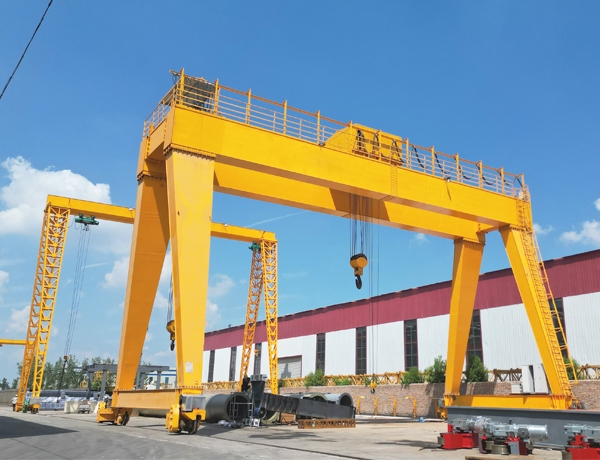
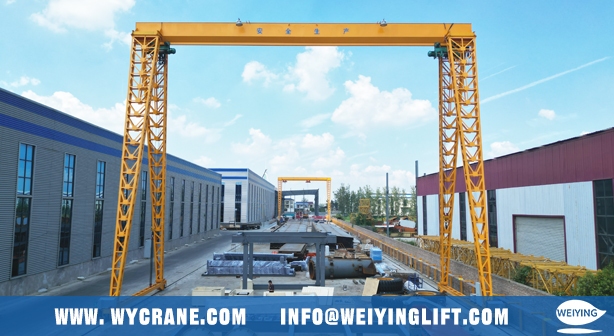
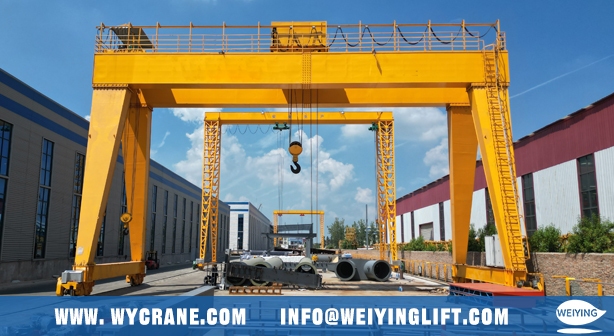
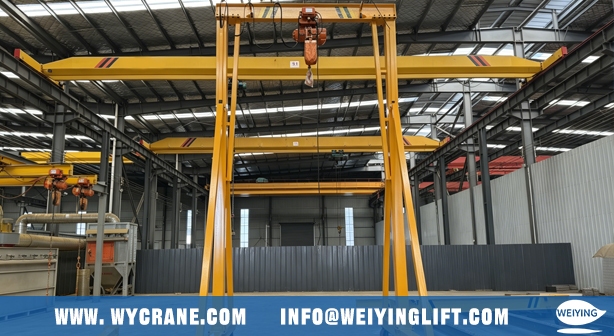
Although all gantry cranes share a similar frame concept, their configurations differ significantly depending on load requirements, duty cycles, and mobility needs. Below is an expanded description of the three major categories, helping you quickly determine which one fits your project.
The most economical and widely used configuration
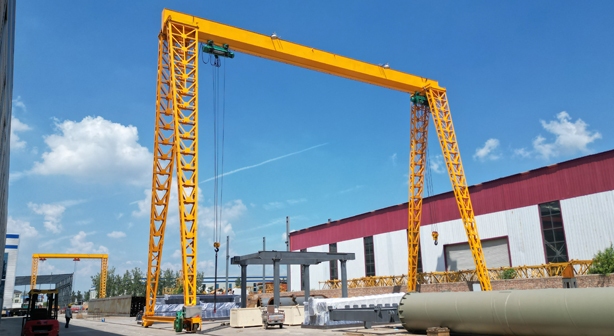
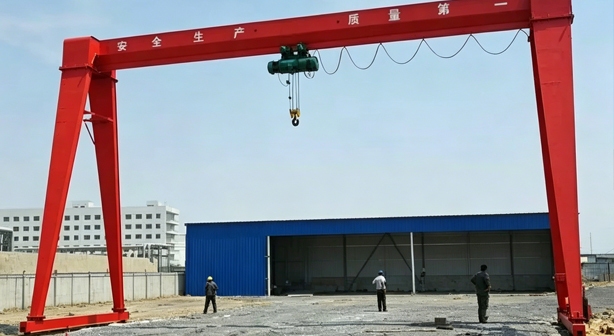
Single girder gantry cranes dominate the mid-range market. Their structure uses one main girder combined with a hoist (often wire rope or chain) to complete lifting tasks.
They are ideal when you need solid performance without the higher cost of a double girder structure.
Key Specifications
Typical Applications
Key advantages:
High load, high duty, large span & heavy industry performance
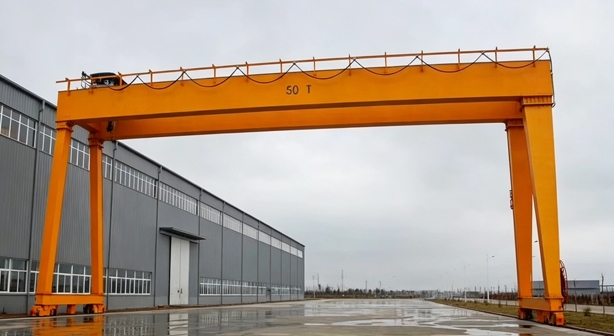
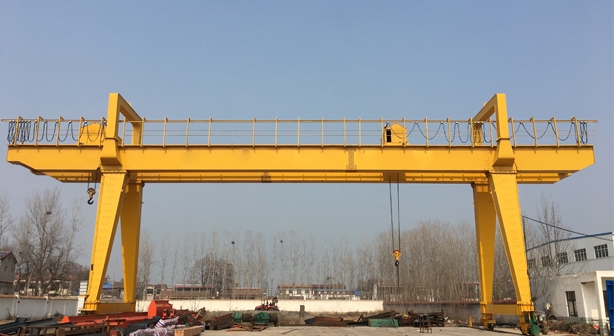
For heavy operations, double girder gantry cranes provide the strength needed for 24/7 industrial use.
Their dual-beam structure supports higher loads, larger spans, and higher lifting heights.
They also allow more advanced hoist options and additional auxiliary hooks.
Key Specifications
Typical Applications
Key advantages:
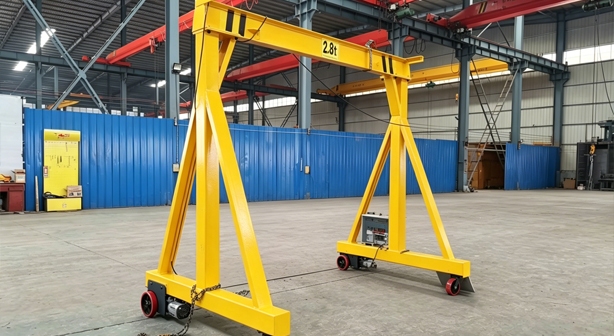
Lightweight, movable, height-adjustable, ideal for maintenance & workshops
Portable gantry cranes are designed for mobility and flexibility, not high loads.
They are often made of aluminum alloy, offering easy assembly and disassembly by one or two people.
Key Specifications
Typical Applications
Key advantages:
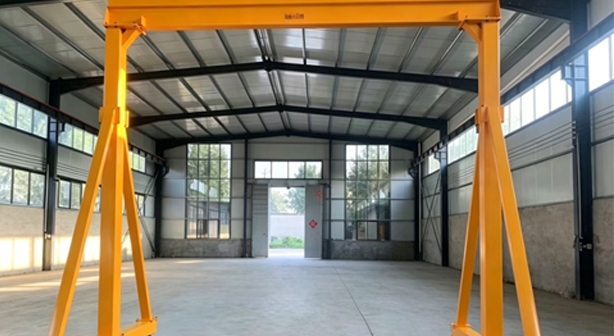
Choosing the right gantry crane involves evaluating more than lifting capacity.
A proper selection considers load, span, lifting height, working class, and actual application conditions.
| Selection Factor | What to Consider | Recommendations / Typical Decisions |
|---|---|---|
| Load Capacity | Defines overall structure, hoist type, and wheel pressure. | 1–10t: Use single girder + hoist (economical). 10–32t: Single/Double girder depending on span & duty. 32–80+t: Double girder + winch trolley required. |
| Span | Influences steel consumption, cost, and structural stability. | <20 m: Single girder normally sufficient. 20–30 m: Evaluate load + duty → may need double girder. >30 m: Double girder strongly recommended to reduce deflection. |
| Lifting Height | Must fit clearance, ceiling beams, lighting, or outdoor conditions. | Low workshops: Use low-headroom wire rope hoist. High stacking: Increase lifting height by 0.5–1 m above required working level. Outdoor yards: Choose higher columns for truck/tipper clearance. |
| Working Class | Indicates duty cycle, usage frequency, and fatigue life. | A3–A4: Light use, maintenance areas. A5: Industrial production (most common, good balance). A6–A7: Heavy/continuous operation (precast, shipyard, steel plant). |
| Application Environment | Indoor/outdoor, weather conditions, wind load, travel distance. | Outdoor: Add wind-proof devices, rain covers, anti-rust paint. Indoor: No wind requirements; choose compact hoist. Long travel distance: Recommend rail-mounted gantry. |
👉 For detailed selection formulas & decision charts:
See: “Gantry Crane Selection Guide: How to Choose the Right Model”
| Core Comparison Items | Single Girder | Double Girder | Portable |
|---|---|---|---|
| Safe Load Capacity | 2 – 32t | 5 – 100t+ | 1 – 10t |
| Application Site | Outdoor yards, small-medium industry | Heavy industry, ports, large yards | Temporary sites, maintenance |
| Foundation Requirement | Simple concrete rail | Reinforced rail | No foundation needed |
| Mobility | Fixed | Permanent | Detachable & movable |
| Core Advantages | Cost-effective, easy maintenance | High load, stable, long span | Portable, fast assembly |
Quick Selection Guide:
| Item | Bridge Crane | Gantry Crane | Key Differences |
|---|---|---|---|
| Installation | Needs building support | Self-supporting | No structure dependence |
| Site | Indoor only | Indoor & outdoor | Wider application |
| Civil Work | High | Low | Lower installation cost |
| Cost | Medium-high | Low-medium | More economical |
👉 Full comparison: “Gantry Crane Comparison Guide”
Typical Market Ranges, Ton-Level Pricing & Key Cost Factors
This section gives a realistic price range so buyers can evaluate budgets early.(Prices vary by configuration, steel cost, and control system.)
| Model | Span (m) | Lifting Height (m) | Working Class | Reference Price (USD) |
|---|---|---|---|---|
| 3 Ton Single Girder Gantry Crane Price | 10 | 3–30 | A3 | $7,500–$11,700 |
| 5 Ton Single Girder Gantry Crane Price | 18 | 3–30 | A3 | $11,000–$17,500 |
| 10 Ton Single Girder Gantry Crane Price | 22 | 3–30 | A3 | $16,500–$26,500 |
| 16 Ton Single Girder Gantry Crane Price | 24 | 3–30 | A4 | $25,000–$36,000 |
| 20 Ton Single Girder Gantry Crane Price | 26 | 3–30 | A5 | $35,000–$50,000 |
| 10 Ton Double Girder Gantry Crane Price | 18 | 6–30 | A3 | $25,000–$36,000 |
| 20 Ton Double Girder Gantry Crane Price | 22 | 6–30 | A5 | $39,000–$57,000 |
| 32 Ton Double Girder Gantry Crane Price | 24 | 6–30 | A5 | $63,000–$93,000 |
| 50 Ton Double Girder Gantry Crane Price | 30 | 6–30 | A6 | $113,000–$172,000 |
| 1 Ton Portable Gantry Crane Price | 2–8 | 4–9 | A3 | $1,200–$2,300 |
| 2 Ton Portable Gantry Crane Price | 2–8 | 4–9 | A3 | $1,800–$3,600 |
| 3 Ton Portable Gantry Crane Price | 2–8 | 4–9 | A3 | $2,500–$4,500 |
| 5 Ton Portable Gantry Crane Price | 2–8 | 4–9 | A3 | $3,600–$6,500 |
👉 For more details: “Gantry Crane Price Guide 2026: Costs, Price Factors, Configurations & Buying Tips”
Gantry crane users often ask about service life, maintenance needs, outdoor safety, and installation procedures.
A gantry crane typically works for 15–25 years, depending on its working class, usage frequency, load conditions, and maintenance quality.
Routine maintenance includes lubrication, inspection of bolts and welds, brake testing, hook checks, and annual load tests.
Yes, with wind-proof devices, rain covers, anti-rust coatings, and proper grounding.
Rail alignment → main beam assembly → electrical wiring → load testing.
We provide complete technical solutions for your lifting equipment.
We ensure smooth installation & stable operation.
Customer satisfaction after delivery.
Safety and compliance are at the core of every crane we design.
International Certifications:CE, ISO, FEM, DIN compliant
Strict Quality Control:Full inspection & load test before delivery
Advanced Safety Features:Overload protection, limit switches, emergency stop
Still unsure? Contact our engineers
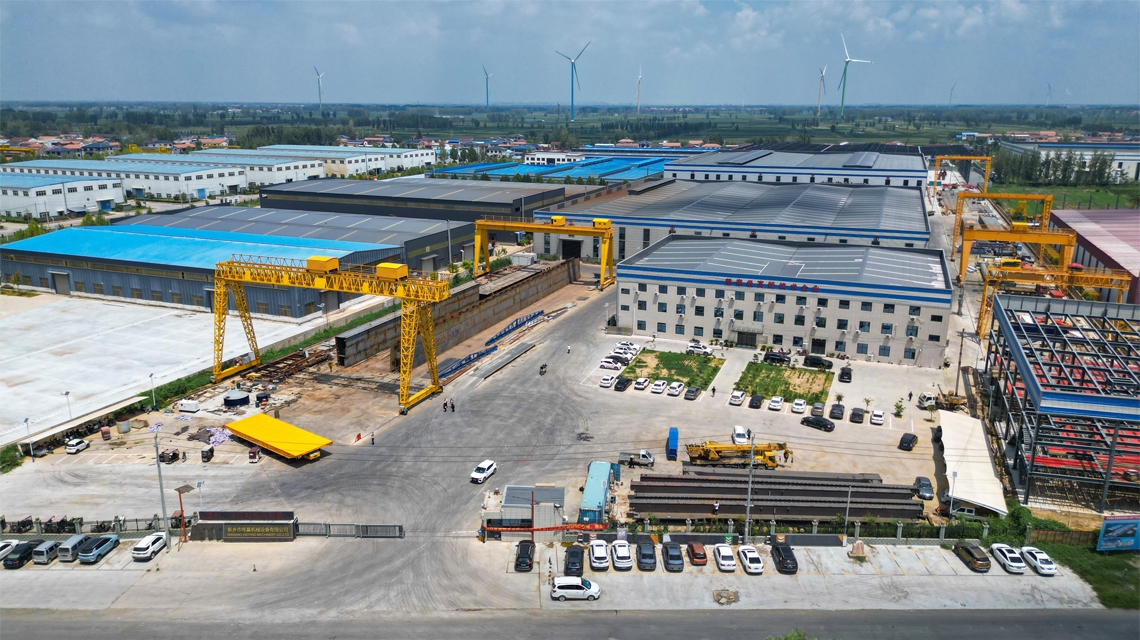
With 34 years of manufacturing experience and 12 years of export expertise, we have built a dual advantage of professional qualifications and a global presence. Our business covers more than 100 countries and regions across Asia, Europe, the Americas, Africa, and Oceania. We are certified under the ISO management system and hold CE product certifications.
Contact us today for your ideal gantry crane solution.
E-mail: info@weiyinglift.com
Website: www.wycrane.com