Installing an overhead crane is not just an equipment decision—it is a structural engineering project that affects the safety, durability, and operational capability of the entire facility. Many buyers start by choosing a crane model, but in reality, the first question should always be:
“Can my building support it?”
This article provides a horizontally expanded, in-depth guide based on four critical dimensions:
It combines engineering principles, real standards like OSHA, ASME, Eurocode, GB codes, and practical insights from industrial projects worldwide.
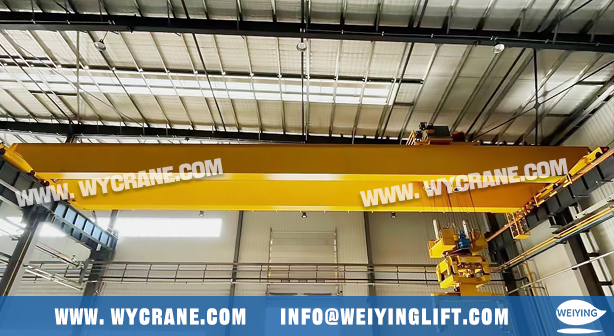
Overhead cranes exert heavy, dynamic loads on a building — far greater than normal industrial equipment. A moving crane adds horizontal thrust, impact forces, vibration, and load distribution changes that the building must absorb safely. When structural capacity is underestimated, several serious risks arise:
In many countries, compliance with engineering standards is legally required. For example:
Failure to verify structural suitability may result in legal penalties, insurance rejection, or denied commissioning approval.
Installing a crane in a building that is not designed for it can create major extra expenses:
Assessing structural requirements early allows companies to avoid wasted investment and reduce downtime.
Unlike new buildings, older facilities were rarely designed with overhead cranes in mind. Evaluating them requires a multi-angle engineering approach.
A professional structural survey is the core of the assessment—not just a visual check, but a calculation-based evaluation.
Many older warehouses use light-duty steel trusses designed for snow and wind loads only. However, crane loads introduce:
Engineers typically check:Steel grade and corrosion,Beam size, section modulus, inertia,Allowable deflection per ASME/EN/GB codes,Connection strength (bolted/welded)
A truss that is “strong enough to stand” is not necessarily strong enough for crane movement.
Columns must resist vertical load transfer from runway beams. Crane loading varies dramatically by type:
| Crane Type | Typical Column Load Increase | Notes |
| Single-girder | Medium | Load transferred asymmetrically |
| Double-girder | High | Larger wheel load + horizontal forces |
| Top-running | Very high | Direct force input into columns |
Engineers check:Buckling capacity,Slenderness ratio,Base plate design,Anchor bolt adequacy
Older buildings often have foundations that do not meet modern heavy-lifting requirements.
Foundation problems lead to:
Strengthening may involve underpinning, enlarging footings, or adding independent support columns.
Modern factories often have complex layouts. Before choosing a crane, obstructions must be mapped:
HVAC systems,Sprinkler lines,Ventilation ducts,Lighting and cable trays,Existing mezzanines or racking,Overhead conveyors
A 10-ton crane may be structurally feasible but operationally impossible if the hook cannot reach functional positions.
Engineers analyze:
This prevents future workflow conflicts.
Height-related limitations are among the most common problems in retrofitting projects.
Low buildings may require:
Operations such as mold changing, steel coil lifting, or pallet stacking require very different hook heights.
A mismatch between building height and operational need often results in:
A professional supplier evaluates both building and process together—not separately.
Starting with a new building offers far more flexibility. The structure can be optimized, avoiding costly retrofits.
Typical crane-ready structures include:
| Structure Type | Key Advantages | Typical Applications |
| Steel Portal Frames | Ideal for industrial production High resistance to horizontal crane loads Easy integration of bracing systems and crane runways |
Manufacturing plants, fabrication workshops, general industrial warehouses |
| Reinforced Concrete Columns with Embedded Steel Plates | Excellent for heavy-duty crane loads Superior vibration resistance Long-term structural durability |
Heavy industry, foundries, steel mills, high-load lifting facilities |
| Combined Steel–Concrete Systems | High structural strength with flexible design Suitable for complex layouts Good performance under dynamic crane loading |
Multi-function production buildings, mixed-use industrial facilities, logistics hubs |
Engineers design all components based on crane load combinations (vertical + horizontal + impact).
Instead of reinforcing later, new buildings integrate crane demands upfront:
Designing correctly from the beginning helps the crane achieve its full lifetime (20+ years).
Overhead cranes do not work in isolation. Space planning includes:
A well-planned layout increases productivity more than just increasing crane capacity.
A manufacturing plant in Ohio, USA wanted to install a 10-ton single-girder overhead crane in a 30-year-old metal-frame building. The company originally believed the project required only purchasing the crane.
A certified structural engineering firm conducted a survey based on OSHA 1910.179 and AISC guidelines. Key findings:
To make the structure crane-ready:
Ensuring your building can support an overhead crane is a critical step involving engineering evaluation, regulatory compliance, and practical operational planning. Existing buildings require detailed structural assessment, while new buildings should incorporate crane considerations from the start. When done correctly, a properly supported overhead crane enhances productivity, improves safety, and increases long-term asset value.
>5 Ton Overhead Crane: A Comprehensive Guide to Choosing the Right Equipment
>How Many Slings Can Be Attached to a Crane Hook? A Complete Professional Guide
>The Guide to Overhead Crane Operator Safety Standards
>Workstation Bridge Crane: The Complete Guide for Buyers
Not necessarily. Many older warehouses were designed only for storage and do not meet the load, stiffness, or horizontal force requirements needed for overhead cranes. A structural engineering assessment is required to verify the capacity of trusses, columns, and foundations.
There are several solutions:
A preliminary assessment typically takes 3–7 days, while a full structural analysis—including load calculations and reinforcement plans—may take 2–4 weeks depending on building complexity.
With 34 years of manufacturing experience and 12 years of export expertise, we have built a dual advantage of professional qualifications and a global presence. Our business covers more than 100 countries and regions across Asia, Europe, the Americas, Africa, and Oceania. We are certified under the ISO management system and hold CE product certifications. Our main product lines include six major series—electric hoists, electric winches, gantry cranes, bridge cranes, marine cranes, and portal cranes—comprising nearly 100 different models.
If you want to learn more, please contact us.
E-mail address: info@weiyinglift.com
Website: www.wycrane.com