A gantry crane running off the track is a serious equipment failure that can affect production efficiency and create significant safety risks. When a rail mounted gantry crane derails, it may cause structural deformation, load falling accidents, equipment damage, and unexpected downtime.
Many users believe that a gantry crane derailment is mainly caused by poor rail installation. However, in actual operation, the problem usually comes from multiple factors, including rail foundation problems, wheel wear, drive system failures, structural deformation, and incorrect operation.
Understanding why a gantry crane runs off the track helps operators identify early warning signs and take effective preventive measures before a serious accident occurs.
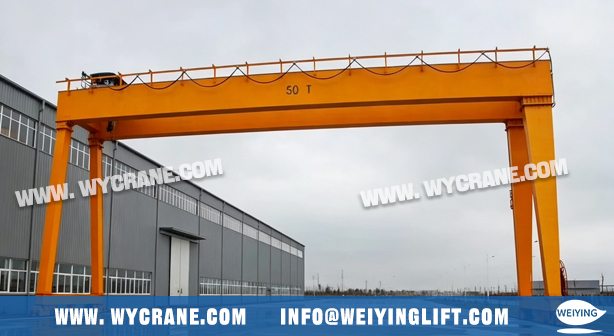
The rail system is the foundation of a rail mounted gantry crane. Any problem with rail installation or long-term rail deformation can directly affect crane stability.
Outdoor gantry crane rails are installed on concrete foundations, but long-term exposure to rain, temperature changes, and soil movement may cause uneven settlement.
If one rail sinks lower than the other:
This problem is common in outdoor working areas where drainage conditions are poor.
Rail gauge refers to the distance between two parallel rails. If the gauge is too wide or too narrow, the crane wheels cannot maintain correct alignment.
Common reasons include:
Incorrect rail gauge causes excessive wheel flange pressure and may eventually lead to a gantry crane derailment.
Bent rails, excessive height differences, damaged rail joints, and debris on the track can affect smooth crane movement.
Common track obstacles include:
When wheels pass over these objects, the crane may experience sudden vibration or wheel lifting, increasing the risk of running off the track.
The wheel assembly directly controls the movement of the gantry crane. Problems with wheels are among the most common causes of derailment.
During long-term operation, crane wheels naturally wear. However, if different wheels have different wear levels, their diameters will change.
As a result:
Regular inspection of wheel diameter and wear condition is essential for maintaining proper gantry crane wheel alignment.
The wheel flange helps keep the crane running along the rail. When the flange becomes severely worn or cracked, it loses its guiding function.
Possible causes include:
A damaged flange can cause the wheel to climb over the rail, resulting in derailment.
If wheel bearings are damaged, the wheel may stop rotating normally.
A blocked wheel creates:
Operators should pay attention to abnormal noise, overheating wheels, or unstable travel performance.
Many large gantry cranes use two motors to drive both sides of the crane. If the motors do not operate synchronously, the crane may twist during travel.
When one travel motor runs faster than the other:
Possible causes include:
Adjusting frequency converter parameters and checking motor performance can help restore synchronized operation.
Travel brakes that fail to release completely can create uneven resistance.
Other mechanical failures include:
These problems may cause one side of the crane to slow down, creating a pulling force that increases derailment risk.
The crane structure must maintain accurate geometry to ensure stable movement.
Long-term overload operation, collision impact, or improper lifting methods may cause:
When the structure changes from a rectangular shape into a distorted frame, the wheels may no longer remain perpendicular to the rails.
As a result, the crane cannot travel smoothly and may eventually run off the track.
Some gantry crane derailment accidents are caused by incorrect operation.
When the load is lifted far away from the center position, it creates uneven forces on the crane structure.
Excessive side loading may cause:
Operators should always keep loads centered whenever possible.
Rapid acceleration, emergency braking, or sudden direction changes while carrying loads can generate strong horizontal forces.
These forces may push the crane sideways and increase derailment risks.
Outdoor gantry cranes are especially affected by strong winds.
Without proper protection:
Outdoor cranes should be equipped with:
When a gantry crane shows unstable movement, inspection should follow a step-by-step process:
Inspect:
Check:
Operate the crane without load at slow speed and observe:
Inspect:
Depending on the cause, solutions include:
Regular maintenance is the most effective way to prevent gantry crane derailment.
| Frequency | Inspection Items |
| Daily | Clean rails, check abnormal noise, observe travel performance |
| Weekly | Check rail fasteners, brakes, and visible damage |
| Monthly | Inspect wheel wear, motor synchronization, electrical components |
| Quarterly | Check structural alignment and crane frame condition |
| Before windy seasons | Test wind protection and anchoring systems |
If a gantry crane shows signs of derailment, stop operation immediately.
Do not use a tractor or other equipment to forcibly pull a derailed crane back onto the track. This may cause permanent deformation of the crane structure and create additional safety hazards.
After repairs, the crane should pass:
before returning to normal operation.
A gantry crane runs off the track mainly because of rail problems, wheel failures, drive system synchronization issues, structural deformation, and improper operation.
Regular inspection, proper maintenance, standardized operation, and reliable installation are the key methods to prevent gantry crane derailment.
Choosing an experienced gantry crane manufacturer that provides professional installation guidance and after-sales support can significantly improve equipment safety and service life.
A gantry crane usually runs off the track due to problems with the rail system, wheel assembly, drive system, crane structure, or improper operation. Common causes include uneven rail foundation settlement, incorrect rail gauge, worn wheels, wheel misalignment, unsynchronized travel motors, structural deformation, and overload operation.
If a gantry crane runs off the track:
Do not forcibly pull the crane back onto the rail with external equipment, as this may cause serious structural damage.
Outdoor gantry cranes may have higher derailment risks because they are exposed to environmental factors such as rain, temperature changes, soil movement, and strong wind.
Proper foundation design, rail maintenance, drainage systems, and wind protection devices are important for safe outdoor operation.

With 34 years of manufacturing experience and 12 years of export expertise, we have built a dual advantage of professional qualifications and a global presence. Our business covers more than 100 countries and regions across Asia, Europe, the Americas, Africa, and Oceania. We are certified under the ISO management system and hold CE product certifications. Our main product lines include six major series—electric hoists, electric winches, gantry cranes, bridge cranes, marine cranes, and portal cranes—comprising nearly 100 different models.
If you want to learn more, please contact us.
E-mail address: info@weiyinglift.com
Website: www.wycrane.com