A 2 ton bridge crane kit is one of the most widely used lifting solutions for light and medium-duty material handling. It is popular in workshops, manufacturing lines, warehouses, maintenance facilities, and small fabrication shops due to its compact structure, high efficiency, and affordable cost.
But for many buyers, one question always arises:
Should I choose a manual 2 ton bridge crane kit or an electric 2 ton bridge crane kit?
Each option has clear advantages depending on workload, usage frequency, budget, and operational expectations. This article provides a deeper comparison to help industrial users, small businesses, and distributors make smarter purchasing decisions—while improving long-term safety, productivity, and ROI.
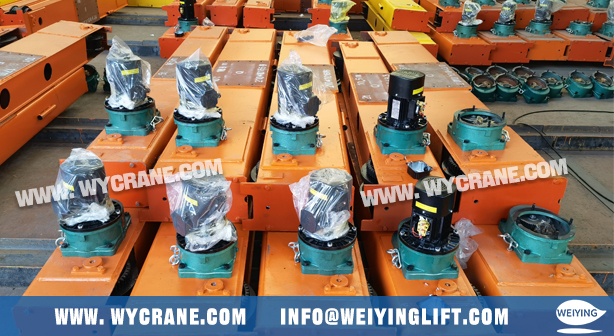
A manual bridge crane kit is a lifting system that uses hand chain hoists, manual trolleys, and manual motion.
It is typically composed of:
How It Operates:
The operator pulls the hand chain to lift or lower the load, and manually pushes the trolley or bridge along the runway. No electrical power is required.
Manual kits are favored in:
They are simple, reliable, and cost-effective for low-frequency lifting.
An electric bridge crane kit is powered by an electric hoist and motorized travel systems. Its components generally include:
How It Operates:
The system uses motors to handle all lifting and horizontal travel, allowing smooth, fast, and precise operation.
Electric crane kits are preferred in:
They significantly improve throughput and reduce labor intensity.
To help users evaluate both systems, let’s compare them across major performance dimensions.
Manual Kit:
Electric Kit:
Verdict:
Electric kits outperform manual kits for productivity-driven industries.
Manual Kit:
Electric Kit:
Verdict:
Electric kits provide superior operator comfort and reduce labor risks.
Manual Kit:
Electric Kit:
Verdict:
Manual kits win for power-free environments.
Manual Kit:
Electric Kit:
Verdict:
Electric kits deliver better accuracy and smoother load handling.
Verdict:
Manual = cheaper initially
Electric = more cost-effective for long-term productivity
Manual Kit:
Electric Kit:
Verdict:
Electric kits offer more built-in safety features.
Choosing between a manual and electric 2 ton bridge crane kit depends on your operations:
| Choose Manual |
Choose Electric |
|
You rarely lift loads You don’t have a power supply You want the lowest initial cost Your lifting height is short You operate in a small workshop |
You need higher lifting efficiency You operate continuously You want better precision You prefer remote control or automation Safety standards are strict You want long-term ROI |
Most industrial users choose electric kits, especially for production lines, fabrication shops, and warehouses.
A small metal fabrication workshop in South Africa originally used a manual 2 ton bridge crane kit for lifting steel sheets and welding components.
At first, the manual system worked well because production volume was low—about 5–7 lifts per day.
However, as new contracts were secured, the number of lifts increased to 30–40 per day. Workers reported:
The company upgraded to an electric chain hoist 2 ton bridge crane kit, and within weeks they saw:
The upgrade paid for itself in less than six months through improved productivity alone.
Buying the wrong kit can lead to safety issues, downtime, and unnecessary costs. Avoid these common mistakes:
Many buyers choose manual kits based only on load capacity, ignoring the workload.
If you operate frequently, manual systems will:
Always match the crane type to your work cycle.
Electric kits require:
For remote areas, a manual kit may be more reliable.
For electric kits:
For manual kits:
Users sometimes purchase only a hoist or trolley without checking:
A complete bridge crane kit ensures all components match safely.
Both manual and electric kits need inspections, including:
Ignoring maintenance reduces lifting safety and equipment lifespan.
Both manual and electric 2 ton bridge crane kits have advantages depending on how and where they are used. Manual kits are suitable for low-frequency, power-free, and budget-limited operations. Electric kits are ideal for productivity-driven environments requiring speed, precision, and operator safety.
For most industrial applications, electric 2 ton bridge crane kits deliver better long-term value, improved safety, and higher efficiency.
>5 Ton Overhead Crane: A Comprehensive Guide to Choosing the Right Equipment
>Understanding Overhead Bridge Crane Load Capacity and Why It Matters
>Shop Overhead Crane: How to Choose the Right Crane for Your Workshop
>How to Choose a Suitable Supplier for Your Overhead Bridge Crane
Manual kits are typically 40–60% cheaper than electric kits due to simpler components and no motorized system. Electric kits, however, offer faster ROI due to higher efficiency and labor savings.
A manual 2 ton crane kit can usually be installed within 2–4 hours, while an electric kit may take 4–8 hours, depending on wiring and power connection requirements.
Yes. Most 2 ton crane kits support future upgrades, allowing users to replace the manual hoist with an electric hoist and motorized trolley when needed.

With 34 years of manufacturing experience and 12 years of export expertise, we have built a dual advantage of professional qualifications and a global presence. Our business covers more than 100 countries and regions across Asia, Europe, the Americas, Africa, and Oceania. We are certified under the ISO management system and hold CE product certifications. Our main product lines include six major series—electric hoists, electric winches, gantry cranes, bridge cranes, marine cranes, and portal cranes—comprising nearly 100 different models.
If you want to learn more, please contact us.
E-mail address: info@weiyinglift.com
Website: www.wycrane.com