When selecting industrial lifting equipment, jib cranes stand out as one of the most versatile and cost-effective solutions for workstation material handling. Among the various types available, pillar-mounted jib cranes (also known as floor-mounted jib cranes) and wall-mounted jib cranes represent the two dominant configurations. Each offers distinct structural characteristics, operational benefits, and ideal use cases. This comprehensive guide compares these two jib crane types across structure, advantages, limitations, applications, and selection criteria to help you make an informed purchasing decision.
Pillar-Mounted Jib Crane: Overview
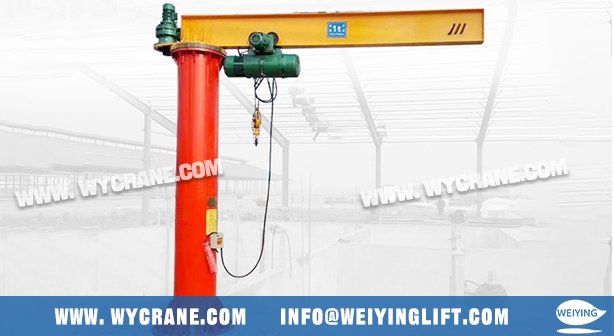
Structural Characteristics
A pillar-mounted jib crane is a free-standing lifting unit anchored directly to the factory floor through a reinforced concrete foundation. It consists of a vertical steel column (pillar) and a horizontal boom (jib arm) that rotates around the column. Because it is entirely self-supporting, this type of crane does not rely on existing building walls or structural columns for stability. This independence allows it to be installed virtually anywhere on the shop floor, including open central areas far from any walls. Typical Specifications:
-
Lifting Capacity: 0.25 to 10+ tons (standard models)
-
Jib Span: 2 to 12 meters
-
Rotation: 180° to 360° full-circle coverage
-
Lifting Height: 2 to 6+ meters
Advantages and Disadvantages
| Aspect | Advantages | Disadvantages |
| Coverage | 360° rotation provides complete circular work area | — |
| Load Capacity | Handles heavy loads; ideal for frequent heavy-duty cycles | — |
| Layout Flexibility | Independent of building structure; installable anywhere | Requires floor space for column and foundation |
| Installation Cost | — | Requires dedicated concrete foundation; higher upfront civil engineering cost |
| Relocation | — | Foundation is permanent; moving the crane is difficult and costly |
Primary Applications
Pillar-mounted jib cranes excel in the following scenarios:
-
Central workstation operations: CNC machine loading/unloading, machining centers requiring material feed from multiple directions
-
Heavy assembly lines: Engine assembly, structural steel welding, large mold changes, and other high-frequency heavy-load operations
-
Open warehouse areas: Cargo yards, loading docks, and bulk storage zones requiring wide-area coverage
-
Supplementary lifting: Serving as a complement to overhead bridge cranes in areas outside the bridge crane’s coverage zone
Wall-Mounted Jib Crane: Overview
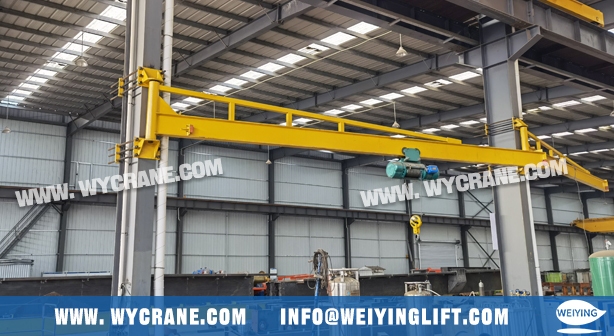
Structural Characteristics
A wall-mounted jib crane is attached directly to an existing load-bearing wall, structural column, or robust building framework using specialized mounting brackets. It requires no floor foundation, as the building structure itself absorbs the lifting loads and bending moments. This “borrowed strength” design makes it an ideal choice for space-constrained environments where preserving floor space is critical. Typical Specifications:
-
Lifting Capacity: 0.125 to 5 tons (limited by wall structure capacity)
-
Jib Span: 2 to 8 meters
-
Rotation: 180° to 270° (restricted by the wall; cannot achieve full-circle rotation)
-
Mounting: Bolted bracket installation
Advantages and Disadvantages
| Aspect | Advantages | Disadvantages |
| Space Utilization | Zero floor footprint; maximizes available shop floor area | — |
| Installation Cost | No concrete foundation required; lower initial investment | — |
| Installation Speed | Bracket mounting allows rapid deployment | — |
| Rotation Range | — | Typically limited to 180°–270°; cannot achieve 360° coverage |
| Load Limitations | — | Capacity strictly limited by wall structural integrity; generally under 5 tons |
| Structural Dependency | — | Must be installed on engineer-verified load-bearing walls; unsuitable for partition walls or light steel frames |
Primary Applications
Wall-mounted jib cranes perform exceptionally well in:
-
Compact workshops: Maintenance bays or assembly stations where floor space is at a premium and aisles must remain clear
-
Linear production lines: Workstations arranged along walls, such as machining equipment rows, where material handling occurs within a semi-circular arc
-
Warehouse loading zones: Dock areas and shelving aisles requiring one-sided loading and unloading operations
-
Existing facility upgrades: Retrofit projects where floor foundation work is undesirable or impractical
Key Differences: Pillar-Mounted vs Wall-Mounted Jib Crane
| Comparison Factor | Pillar-Mounted Jib Crane | Wall-Mounted Jib Crane |
| Foundation | Independent reinforced concrete foundation | Load-bearing wall/building column (no floor foundation) |
| Rotation | 180°–360° full-circle coverage | 180°–270° semi-circular coverage |
| Capacity | 0.25–10+ tons | 0.125–5 tons |
| Jib Span | 2–12 meters | 2–8 meters |
| Floor Footprint | Requires column foundation footprint | Zero floor space usage |
| Installation Complexity | High (requires civil engineering and curing time) | Lower (if wall conditions are adequate) |
| Initial Cost | Higher (includes foundation work) | Lower (if wall conditions are adequate) |
| Structural Independence | Fully independent of building structure | Highly dependent on building load-bearing capacity |
| Relocation Flexibility | Poor (foundation is permanent) | Good (can be disassembled and reinstalled) |
| Best Suited For | Central workstations, heavy loads, full-circle operations | Wall-adjacent workstations, light/medium loads, space constraints |
Critical Differentiators Explained
1. Rotation Range and Work Area Coverage
This is the most significant distinction between the two types. Because a pillar-mounted jib crane has no physical obstructions around its base, it can achieve 360° continuous rotation, allowing operators to swing loads from any direction into the workstation. This is essential when servicing machinery from multiple sides or when materials must be rotated around a central work point. In contrast, wall-mounted models are physically blocked by the wall itself, typically offering only 180° to 270° of swing arc. While sufficient for linear layouts, this limitation makes them unsuitable for applications requiring all-around access.
2. Load Capacity and Structural Load Paths
Pillar-mounted cranes transfer all lifting forces directly through the column into the dedicated concrete foundation, providing superior structural stability. This allows them to handle significantly heavier loads and sustain frequent heavy-duty operational cycles. Wall-mounted cranes, however, impose all lifting moments and forces onto the existing building structure. Their capacity is strictly governed by the wall’s bending resistance and anchor bolt strength. Attempting to exceed these limits without proper structural assessment poses serious safety risks, including wall failure or anchor pullout.
3. Installation Requirements and Hidden Costs
While pillar-mounted cranes require upfront civil engineering—including foundation excavation, rebar placement, concrete pouring, and curing—their advantage lies in being a permanent, independent asset unaffected by future building modifications. Wall-mounted cranes appear simpler to install, but this simplicity is contingent on a critical prerequisite: a structural engineering evaluation of the mounting surface. Lightweight partition walls, aging masonry, or light-gauge steel frames may be entirely unsuitable for mounting. If wall reinforcement is required to meet load-bearing standards, the hidden costs can exceed the price of the crane itself.
How to Choose: A Decision Framework
Selecting between a pillar-mounted and wall-mounted jib crane should be based on a thorough assessment of site conditions, operational requirements, and budget constraints—not merely a comparison of equipment prices.
Choose a Pillar-Mounted Jib Crane If:
✅ Your workstation is located in the center of the shop floor or an open area away from walls
✅ You require 360° full-circle rotation to feed materials from multiple directions
✅ Your lifting needs exceed 3–5 tons, or involve frequent heavy-load duty cycles
✅ Your building walls are lightweight or structurally incapable of bearing additional loads
✅ You need to service multiple machines or workstations from a single crane position
✅ Your budget accommodates foundation construction costs in exchange for long-term operational flexibility
Choose a Wall-Mounted Jib Crane If:
✅ Floor space is extremely valuable, and you cannot tolerate a column obstructing aisles or work zones
✅ Your workstation is positioned directly against a wall or along a production line where 180°–270° rotation is sufficient
✅ Your lifting requirements are under 5 tons, and the mounting wall has been verified by a structural engineer as capable
✅ You need rapid installation and commissioning without waiting for concrete curing periods
✅ You are working with a limited initial budget and wish to minimize capital expenditure
✅ You anticipate future layout changes and need equipment that can be relatively easily relocated
Site Assessment Checklist
Before finalizing your decision, conduct an on-site evaluation using the following checklist:
-
Measure the required work radius: From which angles must materials be lifted into the workstation?
-
Evaluate wall structure: Is the target mounting surface a load-bearing wall? Can structural calculations be provided?
-
Calculate floor space impact: Will a column foundation obstruct forklift lanes, pallet storage, or adjacent equipment?
-
Confirm load requirements: What is the maximum routine lifting capacity needed? Have you included a 20% safety margin?
-
Consider future expansion: Will there be production line adjustments or facility renovations within the next 3–5 years?
Conclusion
Both pillar-mounted jib cranes and wall-mounted jib cranes are mature, reliable workstation lifting solutions. Neither is inherently superior; the optimal choice depends entirely on how well the crane configuration aligns with your specific operational environment.
-
If your priority is maximum coverage, highest load capacity, and layout independence, and you can accommodate foundation construction, the pillar-mounted jib crane is the definitive choice.
-
If you face space constraints, budget limitations, and tight installation schedules, and your operations are wall-adjacent, the wall-mounted jib crane offers a cost-effective, rapid-deployment solution.
Final Recommendation: Before signing a purchase contract, invite the supplier’s engineering team to conduct a site survey. A professional assessment based on your shop floor layout, structural load reports, and actual workflow patterns will always yield a more reliable outcome than comparing specification sheets alone. Investing in a proper site evaluation ensures you select the jib crane type that truly fits your facility—delivering safety, efficiency, and long-term value.
FAQ
Q1: Can a wall-mounted jib crane be installed on any wall?
No. The wall or column must be structurally sound and capable of handling the bending moment and shear forces generated during lifting. A structural engineer must assess the wall before installation. The wall also needs sufficient clearance in front to accommodate the boom’s swing arc.
Q2: Which type is better for serving multiple workstations?
Pillar-mounted jib cranes are far better for multiple workstations. With 360° rotation, a single crane can serve workstations arranged around it in a circle. Wall-mounted cranes are limited to a semi-circle (180°–270°) in front of the wall, making them suitable for a single workstation or a short production line.
Q3: Which type should I choose for a retrofit project?
Wall-mounted jib cranes are usually the preferred choice for retrofits. They require minimal facility modification (no foundation work), install quickly, and can be added to existing wall or column structures without disrupting ongoing operations. Pillar-mounted cranes require excavation and concrete work, which can be disruptive in an active facility.
About us
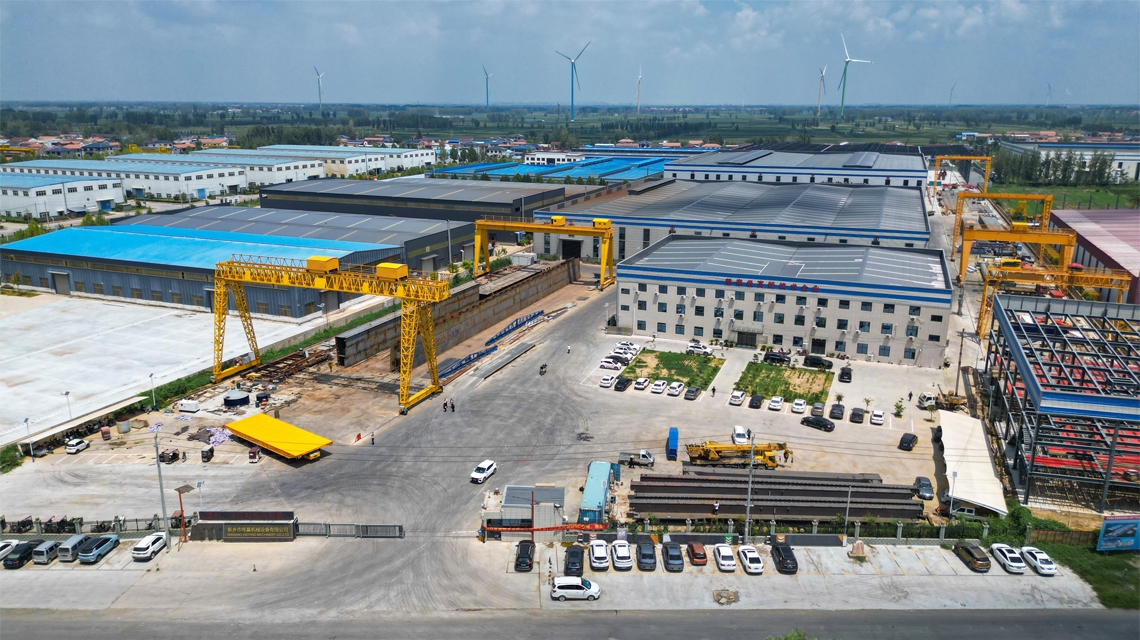
With 34 years of manufacturing experience and 12 years of export expertise, we have built a dual advantage of professional qualifications and a global presence. Our business covers more than 100 countries and regions across Asia, Europe, the Americas, Africa, and Oceania. We are certified under the ISO management system and hold CE product certifications. Our main product lines include six major series—electric hoists, electric winches, gantry cranes, bridge cranes, marine cranes, and portal cranes—comprising nearly 100 different models.
If you want to learn more, please contact us.
E-mail address: info@weiyinglift.com
Website: www.wycrane.com