Choosing the right jib crane for your facility is one of the most important decisions you will make for your material handling operations. A well-selected jib crane improves safety, boosts productivity, and delivers long-term value. A poorly chosen one can lead to inefficient workflows, equipment damage, and even safety hazards.
This guide walks you through everything you need to know—from understanding what a jib crane is and the different types available, to a step-by-step selection process covering capacity, coverage, height, installation, duty classification, and controls.
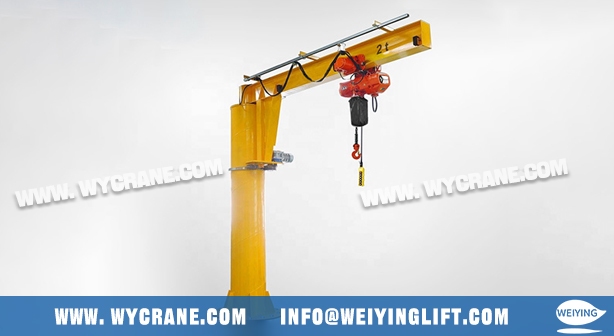
A jib crane is a lifting device featuring a horizontal boom attached to a vertical mast or support structure. The boom rotates around the support, enabling radial lifting motion that covers a circular or semi-circular area.
Jib cranes are widely used in manufacturing plants, warehouses, assembly lines, and loading areas for precise, repetitive lifting operations in confined spaces. They can serve as standalone lifting solutions or as auxiliary devices under larger overhead cranes.
Before diving into the selection process, it is essential to understand the main types of jib cranes available. Each type suits different facility layouts and operational needs.
| Type | Mounting | Rotation | Typical Capacity | Best For |
| Freestanding / Floor-Mounted | Concrete foundation | 360° | 0.25–15 tons | Open areas, heavy-duty lifting, full circular coverage |
| Mast-Style | Floor + overhead support | 360° | Up to 5 tons | Indoor spaces where foundation pouring is not feasible |
| Wall-Mounted | Wall or structural column | 180°–200° | Up to 5 tons | Facilities with limited floor space |
| Portable / Mobile | Casters or wheels | 360° | Light to medium | Multiple workstations, leased or changing spaces |
Selecting the right jib crane requires a systematic approach. Follow these six steps to ensure you choose a crane that matches your operational requirements.
The first and most critical step is identifying the maximum load weight you need to lift. Common jib crane capacities range from 250 kg (500 lbs) for workstation models to over 5 tons for industrial units, with some heavy-duty freestanding designs reaching up to 15 tons or more.
Key considerations:
Include all lifting accessories– The capacity rating must account for the weight of the hoist, trolley, hook block, slings, and any other attachments.
Add a safety margin– Most industrial users select a capacity 10%–20% above their maximum load to account for unexpected variations and future needs.
Consider boom length– Capacity decreases as boom length increases due to leverage and deflection. A longer boom requires a stronger, more rigid structure to handle the same load.
Example: If your heaviest load is 1,000 kg, consider a 1.5-ton crane to provide a comfortable safety buffer and accommodate future growth.
The boom span determines how much area your jib crane can cover. For a 360° floor-mounted crane, the coverage area is a circle centered on the mast. For wall-mounted units, it is a semi-circle (180°–200°).
How to calculate your required span:
Identify your mast location– Choose where the crane will be installed.
Measure the farthest point– From the mast center to the most distant load pickup or drop-off point.
Understand effective span vs. total boom length– The trolley cannot travel to the very end of the boom. The effective working radius is shorter than the total boom length because you must account for the trolley width and end stops.
Add a buffer– If your farthest load is exactly 15 feet from the mast, you need a boom slightly longer than 15 feet so the hook can actually reach that position.
Coverage area by type:
| Type | Coverage Shape | Typical Rotation |
| Freestanding | Full circle | 360° |
| Mast-Style | Full circle | 360° |
| Wall-Mounted | Semi-circle | 180°–200° |
Height Under Boom (HUB) is the vertical distance from the floor to the underside of the horizontal boom. This is not the same as the maximum lifting height—the hoist and hook block take up additional space.
Maximum Lifting Height = Under Boom Height – (Collapsed Hoist Height + Hook Block Height).
Key considerations:
Check overhead obstructions– Look up. Measure clearance for lights, pipes, sprinklers, roof trusses, and any other obstacles the boom must clear during rotation.
Consider overall height– The highest point of the crane after installation must fit within your available headroom.
Pit option for low ceilings– If your facility has a low ceiling but you need to lift tall items, you can recess the mast base into a pit to increase the effective under boom height without raising the boom closer to the ceiling.
Example: If your HUB is 5 meters and your hoist plus hook block collapses to 1.2 meters, your maximum lifting height is approximately 3.8 meters.
Different jib crane types have different mounting requirements. Evaluate your facility’s existing structure to determine which type is feasible.
| Mounting Type | Requirement | Best When |
| Floor-Mounted (Freestanding) | Concrete foundation (new or existing) | You have open floor space and need 360° rotation |
| Mast-Style | Floor anchor + overhead support connection | You want 360° rotation without pouring a full foundation |
| Wall-Mounted | Structurally sound wall or column | Floor space is limited; 180° rotation is sufficient |
| Portable | Level floor surface | You need to move the crane between workstations |
Structural considerations:
Floor-mounted cranesrequire a strong slab foundation—consult a structural engineer to verify your floor can support the loads.
Wall-mounted optionsrely on structural walls or beams—ensure the wall can handle the imposed loads.
Mast-style craneseliminate the cost of a special foundation by using the building’s overhead structure for support.
The duty classification determines how the crane is designed for the frequency and severity of use–. Choosing the wrong duty class can lead to premature wear or equipment failure.
Common duty classifications:
A1–A2– Occasional or manual use, typically for maintenance jibs and inspection platforms.
A3–A4 (Light)– Infrequent use with light loads, suitable for workstation jibs and light assembly.
A5 (Moderate)– Regular use with moderate loads, common in machine shops and fabrication.
A6–A7 (Heavy)– High frequency with heavy loads, designed for production lines and high-cycle operations.
Matching duty class to your operation:
Class D (FEM 1Am)– 200–500 lifts per day
Class E (FEM 2m)– Over 500 lifts per hour
If your workstation involves high frequency and high load factor, both the jib’s slewing mechanism and the hoist’s lifting mechanism need to be selected with a higher duty classification, such as M5 (A5) or M6 (A6).
The final step is choosing the operational features that match your workflow.
Rotation Options:
Manual rotation– Best for light-duty, low-frequency tasks in the 0.25–2 ton range. Operators push the boom by hand.
Semi-assisted rotation– Reduces manual pushing effort and is ideal for machining and fabrication workshops in the 2–5 ton range.
Motorized (electric) rotation– Designed for heavy-duty, continuous operation in the 5–10+ ton range, allowing effortless rotation at the push of a button.
Lift / Hoist Options:
Manual hoists– Cost-effective for low-frequency operations.
Electric chain hoists– Reliable for regular use; available in single-speed, dual-speed, or variable-speed configurations.
Electric wire rope hoists– For heavy-duty, high-capacity applications.
Control Options:
Pendant control– Simple, reliable, and cost-effective for most standard applications.
Wireless remote control– Improves operator safety and positioning accuracy, allowing the operator to stand clear of the load path.
Variable Frequency Drive (VFD)– Provides precision speed control with smooth acceleration and emergency braking.
Additional considerations:
Weatherization– If the crane is installed outdoors or in harsh environments, specify weatherproof components.
Power supply– Verify voltage availability (e.g., 230V, 380V, 460V).
Rotation stops and limit switches– Add safety features to prevent over-rotation and ensure smooth operation.
Selecting the right jib crane is about matching the equipment to your specific operational needs—not just today, but for years to come.By systematically working through capacity, coverage, height, installation, duty class, and controls, you ensure your investment delivers safe, efficient, and reliable performance.
Freestanding jib cranes are anchored to a concrete floor foundation and provide 360° rotation, making them ideal for open floor plans and centre-of-bay workstations. Wall-mounted jib cranes attach to a structural wall or column, require no floor space, and typically provide 180°–200° rotation – best for narrow aisles and perimeter workstations.
Yes, but you must specify weatherproof components – including corrosion-resistant coatings, IP54+ rated motors, and stainless steel or hot-dip galvanized structures. Standard industrial paint is only suitable for dry indoor shops.
Rotation: Manual (light-duty, low frequency), semi-assisted (reduces pushing effort), or motorized/electric (heavy-duty, continuous operation). Control: Pendant control (simple, reliable), wireless remote control (improved safety and positioning), or VFD (variable frequency drive for precision speed control).
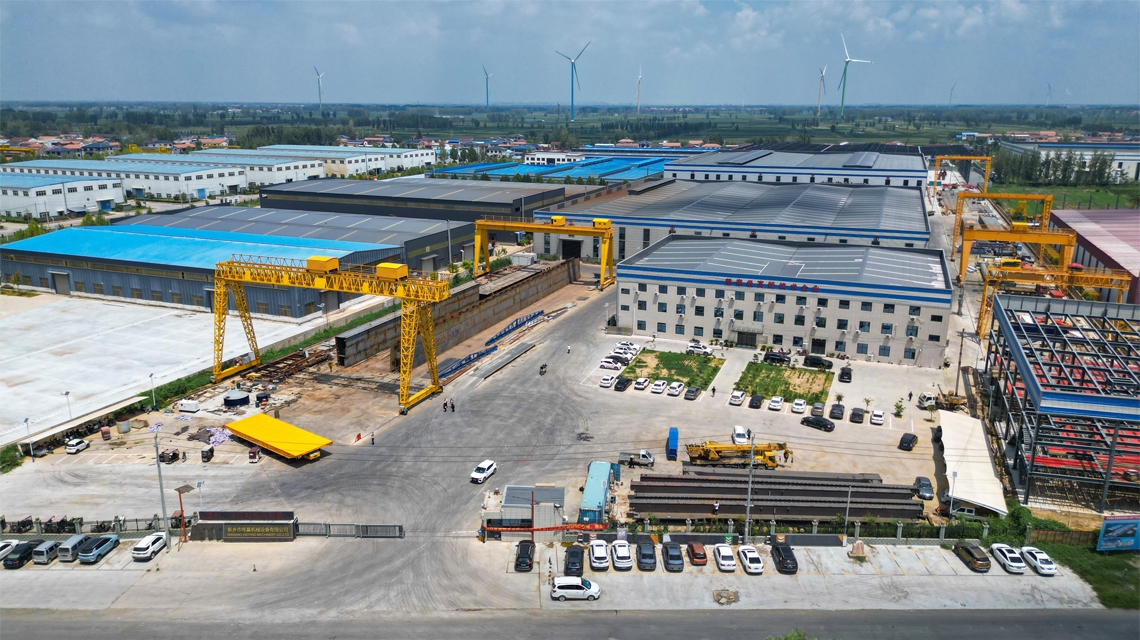
With 34 years of manufacturing experience and 12 years of export expertise, we have built a dual advantage of professional qualifications and a global presence. Our business covers more than 100 countries and regions across Asia, Europe, the Americas, Africa, and Oceania. We are certified under the ISO management system and hold CE product certifications. Our main product lines include six major series—electric hoists, electric winches, gantry cranes, bridge cranes, marine cranes, and portal cranes—comprising nearly 100 different models.
If you want to learn more, please contact us.
E-mail address: info@weiyinglift.com
Website: www.wycrane.com