
This guide explores the primary winch applications across seven major sectors, explains how different types of winches — electric, hydraulic, pneumatic, and manual — match specific tasks, and provides practical selection criteria for buyers and operators.
Overview: Why Winches Are Essential Across Industries
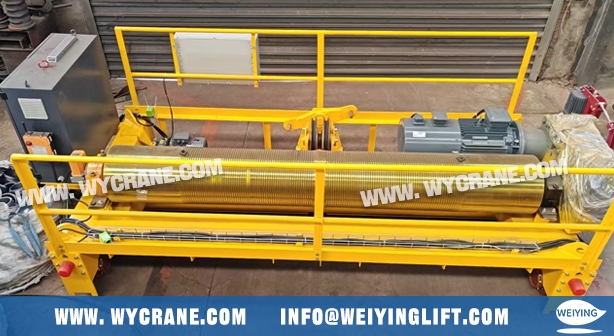
Winches serve a single fundamental purpose: to pull, lift, or tension heavy loads through the winding and unwinding of rope, wire, or chain around a rotating drum. Their adaptability comes from variations in power source, drum configuration, load capacity, and environmental protection.
The global winch market is experiencing consistent growth, driven by rising demand across maritime trade, construction activity, mining expansion, and recreational off-roading.
1. Marine & Offshore Applications
The marine industry represents one of the largest and most demanding winch application sectors. Marine winches operate in corrosive saltwater environments and must withstand extreme loads, making material selection and sealing critical.
Anchoring
An anchor winch (or windlass) deploys and retrieves a vessel’s anchor and chain. It must generate enough torque to break the anchor free from the seabed and haul the entire chain-cable length back to the deck.
Mooring
Mooring winches secure vessels to docks, piers, or buoys. They maintain line tension against wind, current, and wave forces, often equipped with constant-tension systems that automatically adjust to environmental changes.
Towing
Towing winches on tugboats, offshore support vessels, and anchor handling tug supply (AHTS) vessels manage the extreme forces of pulling other ships or floating structures. Capacities range from 50 tonnes to over 400 tonnes of line pull.
Cargo Handling
Cargo winches work alongside ship cranes and derricks to load and unload goods from holds, essential for bulk carriers and general cargo vessels operating at ports with limited shore crane infrastructure.
Offshore Platform Operations
Offshore winches support drilling platforms, FPSO mooring, and subsea construction. Active Heave Compensation (AHC) winches neutralize wave-induced vessel motion to maintain stable loads during launch and recovery operations in seas with significant wave heights of 3 meters or more.
2. Construction & Infrastructure Applications
In construction, winches are indispensable for moving heavy materials, positioning machinery, and ensuring site safety.
Material Hoisting
Construction winches lift bricks, steel beams, concrete buckets, and scaffolding materials to upper floors of buildings under construction. Their robust design and high load capacity streamline vertical logistics on job sites.
Piling & Rigging
Piling winches drive piles into the ground for foundation work. They provide the controlled pulling force needed to position pile drivers and extract temporary casing.
Dam & Spillway Gate Operation
Gate hoists (also called sluice winches) open and close heavy water gates on dams and spillways. These winches must operate reliably under water pressure and debris exposure, often using corrosion-resistant coatings and sealed motors.
Bridge Cable Tensioning
Winches tension the main cables and suspenders during bridge construction, requiring precise load control to ensure structural integrity.
3. Mining Applications
Mining operations demand some of the most rugged winch systems, operating in dusty, explosive, and confined environments.
Underground Ore Haulage
Mining winches transport ore carts through narrow, hazardous tunnels. Explosion-proof models with ATEX/IECEx certification are mandatory in gas-prone underground environments.
Scraper Winching
Scraper winches pull scraper loaders that gather and move loose material in underground mines. They require high line pull and durable drums to handle abrasive ore and rock.
Dragline Repositioning
In open-pit mining, winches reposition draglines and other massive equipment across vast excavation sites.
Shaft Sinking
Sinking winches lower personnel, equipment, and materials into vertical mine shafts during development or maintenance operations.
4. Oil & Gas Industry Applications
The oil and gas sector relies on winches for both onshore and offshore operations where failure is not an option.
Drilling Operations
Winches manage drill string deployment, casing runs, and tool hoisting on drilling rigs. Hydraulic winches dominate this space due to their high starting torque and ability to operate continuously without overheating.
Offshore Rig Mooring
Positioning winches maintain the exact location of floating drilling platforms using anchor chains or dynamic tension cables.
Pipeline Pulling
During subsea pipeline installation, winches pull pipeline sections into position and tension them during laydown operations.
Emergency & Well Control
Winches operate blowout preventer (BOP) handling systems and emergency disconnect systems, requiring fail-safe brakes and redundant controls.
5. Automotive & Off-Road Recovery Applications
Winches have become standard equipment for vehicles operating in challenging terrain.
Vehicle Self-Recovery
Electric winches mounted on the front bumpers of SUVs, trucks, and ATVs pull vehicles out of mud, sand, snow, or ditches. The market for electric towing winches is expanding rapidly as off-roading and adventure tourism grow.
Fleet & Logistics
Commercial vehicle fleets use winches for loading disabled vehicles onto recovery trucks and for securing cargo during transport.
Emergency Response
Fire departments and rescue services deploy winches for accident vehicle towing, high-angle rope rescue, and debris clearance.
6. Entertainment & Stage Production Applications
A less obvious but equally critical winch application lies in the entertainment industry.
Stage Rigging
Theatrical winches raise and lower curtains, lighting rigs, scenery, and performers in concerts, theater productions, and film sets. These winches demand whisper-quiet operation, precise speed control, and absolute reliability to protect performers and equipment.
Flying Systems
Automated flying systems in large venues use synchronized winch arrays to move performers through the air, requiring programmable control and emergency stop systems.
7. Forestry & Agriculture Applications
Logging Operations
Forestry winches skid felled timber from cutting sites to collection points. Mounted on tractors or specialized skidders, these winches must handle shock loads from tangled timber and uneven terrain.
Agricultural Use
Farmers use winches to pull stuck machinery, tension fencing wire, and load hay bales or livestock onto trailers.
Types of Winches by Power Source and Their Best Applications
| Winch Type | Power Mechanism | Best Applications | Key Advantage |
| Electric Winch | Electric motor + gearbox | Marine mooring, vehicle recovery, stage rigging, light construction | Quiet, easy to install, low maintenance |
| Hydraulic Winch | Hydraulic motor + pump | Heavy towing, offshore drilling, mining, anchor handling | High torque, continuous duty, smooth control |
| Pneumatic Winch | Compressed air motor | Mining (explosive atmospheres), offshore hazardous zones | Intrinsically safe, no spark risk |
| Manual Winch | Hand crank | Small boats, trailers, light agricultural tasks | No power required, simple, portable |
| Diesel Winch | Diesel engine drive | Remote sites without electrical infrastructure | Self-contained power, high mobility |
How to Choose the Right Winch for Your Application
Selecting the correct winch requires matching operational requirements to technical specifications:
- Define the Load: Calculate the maximum static and dynamic loads, including safety factors.
- Determine Line Speed: Fast speeds for vehicle recovery; slow, precise speeds for subsea lifting.
- Assess the Environment: Marine environments require corrosion resistance; mining requires explosion-proofing.
- Select Power Source: Match available infrastructure (electrical grid, hydraulic system, compressed air) to the winch type.
- Check Certifications: Marine winches need ABS/DNV/LR classification; mining winches need ATEX/IECEx.
- Evaluate Duty Cycle: Continuous operations (towing, drilling) favor hydraulic systems; intermittent operations suit electric winches.
FAQ
Q1: What are the main applications of winches?
Winches are primarily used for pulling, lifting, and tensioning heavy loads across marine (anchoring, mooring, towing), construction (material hoisting, piling), mining (ore haulage, scraper operations), oil & gas (drilling, offshore positioning), automotive (vehicle recovery), and entertainment (stage rigging) industries.
Q2: What is the difference between an electric winch and a hydraulic winch?
Electric winches use a motor and gearbox, offering quiet operation and easy installation ideal for moderate loads. Hydraulic winches use pressurized fluid to drive a motor, delivering higher torque and continuous-duty performance for heavy industrial and marine applications.
Q3: Can one winch be used for multiple applications?
Yes. Combined anchor mooring winches and general-purpose industrial winches can perform multiple tasks. However, specialized applications (e.g., AHC offshore winches, explosion-proof mining winches) require purpose-built designs.
Conclusion
The main applications of winches span virtually every heavy industry on Earth. Whether it’s an electric marine winch securing a container ship at a bustling port, a hydraulic mining winch hauling ore through a hazardous underground tunnel, or a pneumatic offshore winch positioning a drilling platform in the North Sea, winches are the unsung heroes of modern infrastructure.
Understanding your specific application — load, environment, duty cycle, and safety requirements — is the first step toward selecting the right winch system. As industries continue to automate and electrify, winch technology is evolving with smarter controls, IoT monitoring, and higher efficiency, ensuring these essential machines remain at the heart of global industry.