

Why Regular Inspections Matter
Regulatory requirement. Standards such as OSHA 1910.179 and the ASME B30 series require documented, periodic crane inspections. Missing them isn’t just risky—it’s a compliance violation that surfaces the moment an incident is investigated.
Failure prevention. Equipment defects follow a predictable path: normal wear → visible deterioration → functional degradation → failure. Inspections catch problems at stage two, when a $20 rope costs $20 instead of a dropped load costing $20,000—or worse.
Lower lifetime cost. A crane on a disciplined inspection schedule lasts years longer, because worn components get replaced before they damage the components around them.
Understanding the Three Inspection Tiers
| Tier | Frequency | Who Performs It | Depth |
|---|---|---|---|
| Daily / Pre-shift | Every shift | Operator | Visual + function test (~10 min) |
| Monthly | Monthly | Maintenance staff | Torque, lubrication, wear measurement |
| Periodic / Annual | 12 months max | Qualified person | Structural + load testing |
Daily / Pre-Shift Inspection Checklist
- ☐Column and arm: no cracks, dents, corrosion, or deformation
- ☐Welds: no visible cracks, especially at arm-to-column connections
- ☐Anchor bolts: present, tight, safety washers intact
- ☐Rotation bearing: no excessive play or grinding noise
- ☐No broken wires (count against retirement criteria below)
- ☐No kinks, crushing, flattening, or bird-caging
- ☐Rope properly seated in sheaves; lubrication adequate
- ☐Chain: no cracked or deformed links, no stretching
- ☐No cracks, bending, or twist
- ☐Throat opening within manufacturer’s limit
- ☐Safety latch present and closing properly
- ☐Swivel rotates freely
- ☐Hoist brake holds the load at any point in travel
- ☐Upper and lower limit switches stop motion correctly
- ☐Emergency stop button functions
- ☐Pendant/remote buttons responsive; e-stop not bypassed
- ☐Power cable no cuts or exposed conductors; grounding intact
- ☐Raise and lower through full travel—motion smooth, no slipping
- ☐Rotate arm through full range—no binding, no unusual noise
- ☐Brake test: stop at mid-travel, hook must not drift
- ☐Swing radius clear of people, stock, and obstructions
- ☐Load rating label legible
Monthly Inspection Checklist
- ☐Re-torque anchor bolts to specification; check for looseness from vibration
- ☐Inspect all structural bolts for tightness and condition
- ☐Measure column verticality; investigate any visible lean
- ☐Lubricate rotation bearing, hoist gears, and wire rope per manufacturer schedule
- ☐Check brake pad/shoe wear; adjust or replace before limit
- ☐Inspect trolley wheels/bogies for wear and alignment
- ☐Check limit switches for physical damage and correct adjustment
- ☐Inspect pendant station, cable, and plug for damage
- ☐Tighten control panel connections; check for overheating signs
- ☐Test ground continuity
- ☐Review daily check records; follow up on any recurring defects
- ☐Update the inspection log with date, findings, and actions
Periodic / Annual Inspection (Qualified Person)
- Structural examination: close visual plus magnetic-particle or dye-penetrant testing of critical welds; measurement of arm deflection under known load against the manufacturer’s baseline
- Rotation bearing: internal inspection or play measurement
- Hoist unit: brake torque test, gearbox condition, rope retirement assessment against formal discard criteria
- Electrical: insulation resistance testing, protective device verification
- Load test: typically 110% of rated capacity for operational (dynamic) testing and 125% for static testing, per applicable standards and manufacturer instructions—after any structural repair or reinstallation, a load test is mandatory before returning to service
- Report: a written record of findings, deficiencies, corrective actions, and the next inspection due date
When to Inspect More Often
- Any suspected or confirmed overload
- Collision or impact with the crane
- Severe weather (especially for outdoor or open-door units)
- Return to service after months of storage
- Unusual noise, vibration, or smell during operation
When to Replace: Retirement Criteria
Wire rope: retire when broken wires exceed industry norms—commonly 6 broken wires in one lay length, or 3 in one strand—for general service; immediately for any kink, crushing, or corrosion pitting.
Chain: discard if links are cracked, gouged deeper than 10% of link diameter, or stretched beyond the manufacturer’s gauge limit.
Hook: retire if throat opening has increased more than 15% from original, if any crack is found, or if the hook has been twisted more than 10° from the plane.
Structure: any crack in a load-bearing member, visible permanent deformation of the arm, or anchor bolt failure means the crane is out of service until evaluated by a qualified person.
Rule of thumb: when repair cost approaches 50% of replacement cost—or when spare parts are no longer available—replacement is usually the safer economic decision.
FAQ
Who qualifies as a “qualified person” for annual inspection?
How long must inspection records be kept?
What if a daily check fails mid-shift?
Get the Printable Checklist
Download the Jib Crane Inspection Checklist PDF Daily · Monthly · Annual · Printable A4
About us
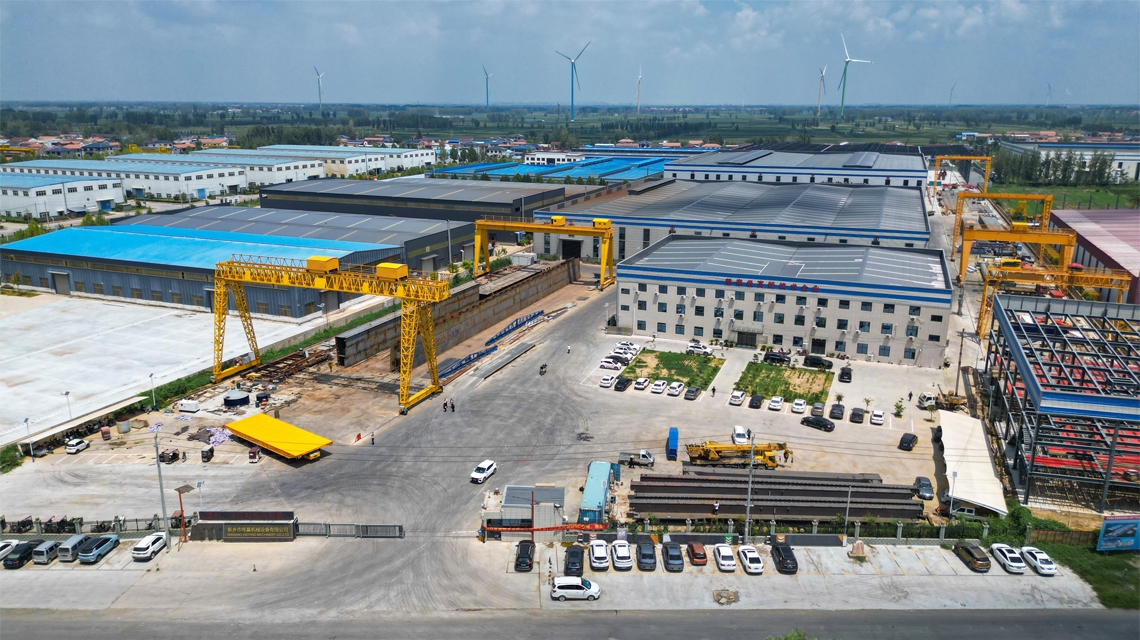
With 34 years of manufacturing experience and 12 years of export expertise, we have built a dual advantage of professional qualifications and a global presence. Our business covers more than 100 countries and regions across Asia, Europe, the Americas, Africa, and Oceania. We are certified under the ISO management system and hold CE product certifications. Our main product lines include six major series—electric hoists, electric winches, gantry cranes, bridge cranes, marine cranes, and portal cranes—comprising nearly 100 different models.
If you want to learn more, please contact us.