Choosing the right industrial winch is not simply a matter of selecting the highest-capacity model available. The correct winch needs to match the actual application, load requirements, operating speed, wire rope length, power supply, working environment, duty cycle, and safety requirements. Choosing an oversized winch can increase equipment and operating costs, while an undersized winch may lead to overheating, excessive wear, unstable operation, or reduced service life.
Whether you need an electric winch for a factory, a heavy-duty winch for construction, or a specialized winch for outdoor or marine applications, understanding the key selection factors will help you choose equipment that is both safe and cost-effective.
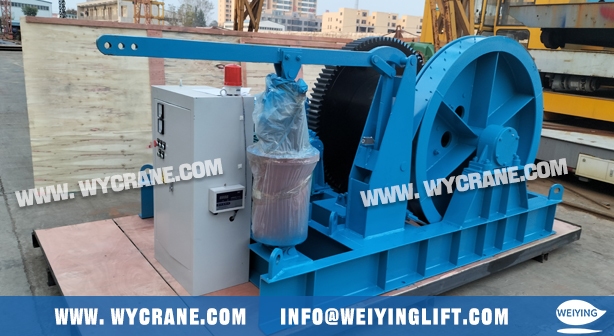
The first step in industrial winch selection is to clearly define what the winch will actually do. A winch used to pull machinery along the ground has different requirements from one used to lift materials vertically. The operating environment and frequency of use are also important because they directly affect the required winch configuration.
Before selecting a model, consider the following questions:
For example, an electric industrial winch installed in a factory may prioritize smooth control, reliable braking, and convenient power supply. A winch used on a construction site may require a more rugged structure and greater flexibility, while a marine winch may require additional corrosion protection.
Defining the application first prevents you from selecting a winch based only on load capacity while overlooking other important operating conditions.
Industrial winches are available in several configurations, with electric, hydraulic, pneumatic, and manual winches being the most common. The best type depends mainly on the available power source, required performance, operating environment, and frequency of use.
| Winch Type | Main Advantages | Typical Applications |
| Electric Winch | Efficient, easy to control, convenient power supply | Factories, workshops, warehouses, construction |
| Hydraulic Winch | High torque and suitable for demanding applications | Mining, marine, heavy equipment |
| Pneumatic Winch | Suitable for certain hazardous environments | Oil & gas, chemical industries |
| Manual Winch | Simple structure and no external power required | Light-duty and occasional applications |
For many industrial facilities, an electric industrial winch is a practical choice because it offers relatively simple installation and convenient operation. Electric winches can also be equipped with electromagnetic brakes, limit switches, remote controls, variable-speed control, and other features according to project requirements.
However, the best choice should always be based on the complete working conditions rather than the winch type alone.
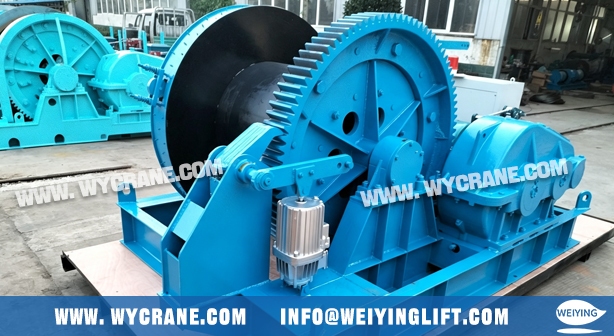
Capacity is one of the most important factors when choosing an industrial winch, but it should be evaluated together with line speed and rope requirements.
One important distinction is the difference between pulling capacity and lifting capacity. A winch designed for horizontal pulling should be selected according to the required line pull, which can be affected by load weight, slope, rolling resistance, friction, and starting resistance. A winch used for vertical lifting must be specifically designed and rated for lifting the required load.
Therefore, a 10-ton load does not automatically mean that every application requires a “10-ton winch.” The actual required capacity depends on how the load is moved and the operating conditions.
Line speed is another consideration. A higher speed can improve productivity when loads need to be moved frequently over a long distance, while a lower speed may provide better control during positioning or heavy-duty operations. In applications where different speeds are required, a variable-frequency drive (VFD) can provide smoother starting, stopping, and speed adjustment.
The wire rope and drum should also match the application. The rope diameter, rope length, drum dimensions, and allowable rope layers all affect the final configuration. The drum needs enough capacity for the required working length while maintaining appropriate rope winding and operating safety.
For a preliminary selection, the main parameters can be summarized as:
The final specification should be confirmed according to the actual load conditions and the manufacturer’s technical calculation.
After determining the basic mechanical requirements, consider how the industrial winch will be powered and how often it will operate.
For electric winches, the available voltage and frequency should match the local power supply. Motor power should be selected according to the required load, speed, duty cycle, and mechanical efficiency rather than simply choosing the largest available motor.
The duty cycle is particularly important for industrial applications. A winch used occasionally does not experience the same thermal and mechanical demands as a winch that operates repeatedly throughout a production shift. Frequent operation may require a more robust motor, gearbox, brake, and cooling configuration.
The working environment should also be considered. Indoor factory applications are generally easier to protect than outdoor installations. Outdoor winches may need additional protection against rain, dust, humidity, temperature changes, and corrosion. In marine or coastal environments, corrosion-resistant materials and protective coatings may be especially important.
Selecting the winch according to both the power supply and working environment can significantly improve reliability and service life.
A properly sized winch still needs an appropriate safety and control configuration. Safety components should be selected according to the application, load characteristics, operating method, and applicable local requirements.
Common industrial winch safety and control features include:
Installation is equally important. The mounting structure must be strong enough to withstand the forces generated during operation, and the rope direction should be compatible with the winch drum and installation position. For fixed installations, the foundation, mounting bolts, support structure, and rope alignment should all be checked before commissioning.
A reliable industrial winch is therefore the result of both correct equipment selection and correct installation.
Price is an important part of the purchasing decision, but the lowest initial price does not necessarily represent the lowest overall cost. An industrial winch that is poorly matched to the application may require more maintenance, experience faster component wear, or need replacement earlier than expected.
The price of an industrial winch is generally influenced by several factors, including:
The best approach is to compare the complete configuration rather than comparing prices based only on capacity.
For example, two electric industrial winches with the same rated pulling capacity may have different prices because they use different motors, gearboxes, control systems, duty ratings, or wire rope configurations. A slightly higher initial investment may be worthwhile if it provides better reliability and better performance for the intended application.
Before placing an order, review the following information:
| Selection Factor | What to Confirm |
| Application | Pulling, lifting, or specialized operation |
| Capacity | Required rated load or line pull |
| Speed | Required lifting or pulling speed |
| Rope | Diameter, length, construction |
| Drum | Size and rope capacity |
| Power | Voltage, frequency, motor power |
| Duty Cycle | Occasional, intermittent, or frequent operation |
| Environment | Indoor, outdoor, marine, dusty, corrosive, etc. |
| Control | Pendant, push-button, radio remote, VFD |
| Safety | Brake, limit switch, overload protection, emergency stop |
| Installation | Mounting method and foundation requirements |
Once these parameters are confirmed, it becomes much easier to identify the appropriate industrial winch model and configuration.
Choosing the right industrial winch requires more than matching the equipment to the weight of the load. The application, pulling or lifting capacity, line speed, wire rope, drum capacity, power supply, duty cycle, working environment, installation method, and safety features all need to be considered together.
For most industrial projects, the best winch is not necessarily the largest or the most powerful model. It is the model that provides sufficient capacity and performance while matching the actual working conditions and expected operating frequency.
A practical selection process is:
Application → Capacity → Speed → Rope & Drum → Power → Duty Cycle → Environment → Safety → Final Configuration
If you are unsure which industrial winch is suitable for your project, providing the load capacity, pulling distance or lifting height, required speed, working frequency, power supply, and installation environment will allow the manufacturer to recommend a more accurate configuration.
The required capacity depends on the actual application. For lifting, the winch must have a suitable rated lifting capacity. For pulling, the required line pull depends on factors such as load weight, slope, friction, rolling resistance, and starting conditions.
Electric winches are widely used in factories, workshops, warehouses, and general industrial applications because they are convenient to operate and integrate with electrical control systems. Hydraulic winches are often preferred where high torque and demanding heavy-duty operation are required. The choice depends on the available power source and working conditions.
Industrial winch prices vary according to capacity, motor power, line speed, wire rope length, drum size, duty cycle, control system, safety features, and customization. A complete technical specification is normally required to provide an accurate quotation.
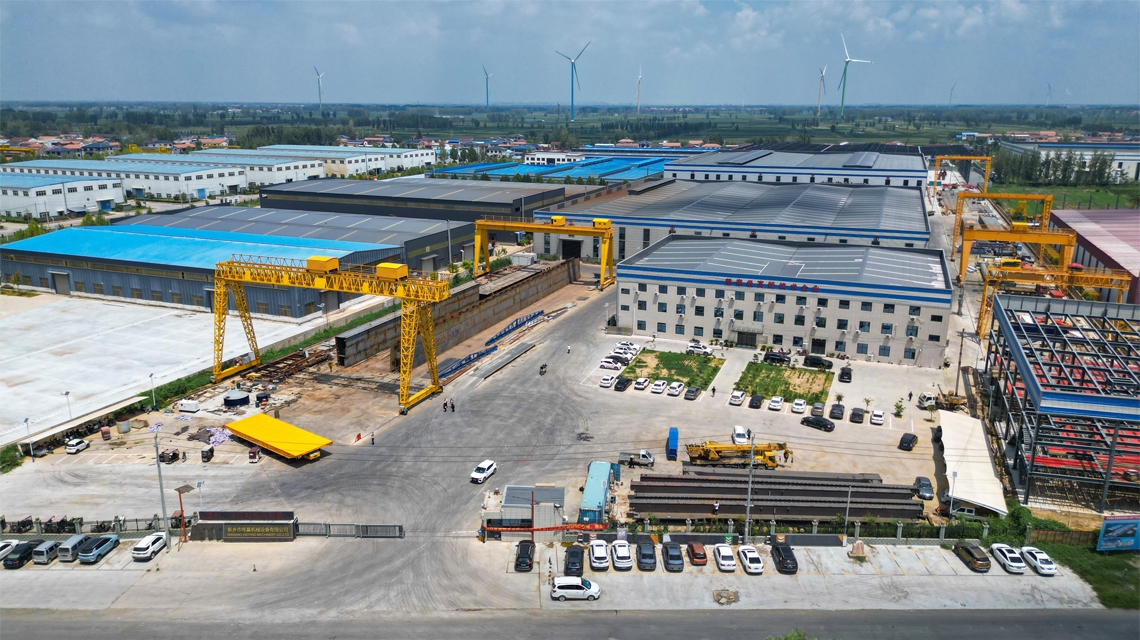
With 34 years of manufacturing experience and 12 years of export expertise, we have built a dual advantage of professional qualifications and a global presence. Our business covers more than 100 countries and regions across Asia, Europe, the Americas, Africa, and Oceania. We are certified under the ISO management system and hold CE product certifications. Our main product lines include six major series—electric hoists, electric winches, gantry cranes, bridge cranes, marine cranes, and portal cranes—comprising nearly 100 different models.
If you want to learn more, please contact us.
E-mail address: info@weiyinglift.com
Website: www.wycrane.com