The lifespan of a bridge crane is not defined by years alone — it depends on how the crane is used, maintained, and upgraded over time.
On average, a well-designed bridge crane can last 20 to 30 years, but in reality, some cranes serve safely for over 40 years with proper maintenance and modernization.
For industries such as steel production, logistics, and manufacturing, understanding how long a bridge crane will perform efficiently is crucial for planning investments, ensuring safety, and managing long-term operational costs.
This article explores the standard design life of bridge cranes, how operating class and working conditions affect that lifespan, and what steps can be taken to extend it.
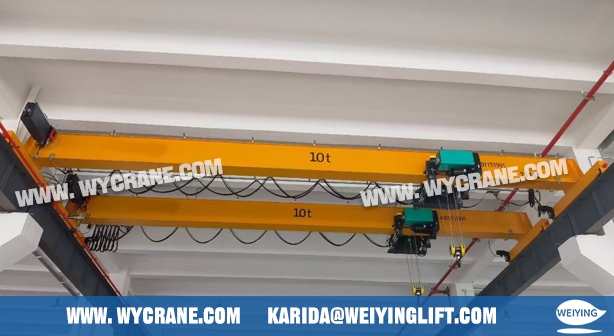 | 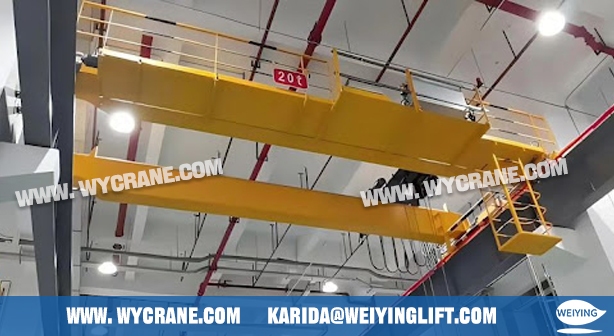 |
Every bridge crane is classified based on its duty cycle, which defines how frequently it operates and how much load it typically handles.
This classification determines not only its performance capability but also its expected service life.
Most international crane standards — such as FEM (European Federation of Materials Handling) and ISO 4301 — divide cranes into light, medium, heavy, and extra-heavy duty classes.
Used for occasional lifting, typically 1–2 hours per day at 10–25% of full capacity.
Common in small workshops and maintenance facilities.
Typical lifespan: 25–30 years under proper use.
Operates 4–6 hours per day with moderate loads (40–60% of rated capacity).
Common in assembly lines or warehouse applications.
Typical lifespan: 20–25 years.
Handles near-full capacity frequently, often in multi-shift operations.
Found in steel mills, ports, and foundries.
Typical lifespan: 15–20 years due to higher stress and wear.
Works almost non-stop under extreme conditions, with frequent overloads and high ambient temperatures.
Typical lifespan: 10–15 years without major overhaul, depending on design quality.
Understanding your crane’s working class is the foundation for estimating its real-world lifespan and maintenance needs.
Different types of bridge cranes are built with varying design expectations. While the structure of a bridge crane can often last for decades, its components — motors, hoists, and control systems — have shorter replacement cycles.
| Crane Type | Typical Design Life (Years) | Key Notes |
|---|---|---|
| Single Girder Bridge Crane | 20–25 years | Lighter design, fewer stress points; suitable for moderate workloads. |
| Double Girder Bridge Crane | 25–30 years | Stronger frame, handles higher loads; suitable for industrial use. |
| Explosion-Proof or Metallurgical Cranes | 15–20 years | Designed for harsh or high-temperature environments; components wear faster. |
| Foundry or Continuous Process Cranes | 10–15 years | Operate under heavy heat and load stress; require frequent refurbishment. |
Even after the design lifespan, a well-maintained crane structure can often be reused safely through modernization or component replacement, extending total service life by another 10–20 years.
A crane’s longevity starts with its design and build quality.
Cranes constructed with high-grade steel, precision welding, and quality electrical components will naturally last longer.
Manufacturers that follow FEM and ISO standards ensure accurate stress calculations and load distribution, reducing fatigue on the main beam and end carriages.
Similarly, advanced features like variable frequency drives (VFDs) and smart load monitoring systems help prevent mechanical shocks that shorten component life. Choosing a reliable manufacturer is therefore an investment in the crane’s long-term reliability.
The crane’s environment has a direct impact on wear and corrosion:
Indoor vs Outdoor: Outdoor cranes face moisture, temperature changes, and UV exposure, accelerating rust and electrical degradation.
Temperature Extremes: In cold regions (below –30°C), steel becomes brittle, while in hot environments (above 50°C), motors and insulation degrade faster.
Dust and Chemicals: Foundries, cement plants, and chemical workshops expose cranes to corrosive dust and fumes that damage bearings and cabling.
Protective coatings, IP65-rated electrical enclosures, and weather-resistant materials are essential to maintaining long-term durability in such environments.
Regular maintenance is the single most important factor in extending a crane’s lifespan.
A preventive maintenance program should include:
Daily checks on hoist brakes, limit switches, and wire ropes.
Monthly inspections of electrical systems, lubrication points, and bolts.
Annual load testing and structural assessment.
Ignoring maintenance leads to small problems — like bearing noise or oil leaks — developing into major failures.
Companies that follow predictive maintenance schedules using vibration sensors and data logging often extend crane life by up to 30%.
Cranes designed for light duty can last 25 years or more — but if used continuously near their rated capacity, their lifespan can drop by half.
Overloading, even occasionally, causes structural fatigue and accelerates motor and gearbox wear.
A good rule is to operate within 70–80% of rated capacity for routine lifts.
Installing a load monitoring system helps track actual usage and ensures safe, predictable performance throughout the crane’s service life.
Technology evolves faster than steel wears out.
Even after 20 years, a crane’s structure may still be sound, while electrical and mechanical parts become outdated or inefficient.
Upgrading components such as hoists, control systems, drives, and safety devices can breathe new life into an old crane.
A modernization project can improve reliability, reduce downtime, and extend service life by 10–15 additional years at a fraction of the cost of replacement.
Many companies choose modernization as part of a sustainability strategy — reducing waste and maximizing equipment ROI.
A crane is only as good as the person operating it.
Improper handling, such as sudden starts, jerky stops, or dragging loads, causes mechanical stress and premature component failure.
Regular operator training programs ensure personnel understand load charts, operational limits, and emergency procedures.
Trained operators can identify unusual vibrations, noises, or temperature changes early — allowing timely maintenance before damage occurs.
This human factor can easily add several years to a crane’s effective lifespan.
To achieve long-term, reliable service from your bridge crane, adopt a proactive management approach:
Conduct periodic structural inspections to identify early signs of fatigue or corrosion.
Follow the manufacturer’s maintenance schedule and document all repairs.
Use appropriate lubricants and parts rated for your operating temperature and duty class.
Install smart monitoring systems that track loads, cycles, and maintenance intervals.
Modernize old cranes instead of replacing them entirely — upgrade control systems, drives, and safety components.
By combining these strategies, you can often extend the effective life of your crane by 30–50%, maximizing return on investment and ensuring safe operation for decades.
The average lifespan of a bridge crane depends on more than its design — it reflects how responsibly it is operated, maintained, and modernized.
While typical service life ranges from 15 to 30 years, proper care can double that figure.
By investing in high-quality manufacturing, operating within design limits, and maintaining a consistent inspection and upgrade routine, businesses can ensure that their bridge cranes continue to perform safely and efficiently throughout their entire lifecycle.
With 34 years of manufacturing experience and 12 years of export expertise, we have built a dual advantage of professional qualifications and a global presence. Our business covers more than 100 countries and regions across Asia, Europe, the Americas, Africa, and Oceania. We are certified under the ISO management system and hold CE product certifications. Our main product lines include six major series—electric hoists, electric winches, gantry cranes, bridge cranes, marine cranes, and portal cranes—comprising nearly 100 different models.
If you want to learn more, please contact us.
E-mail address: karida@weiyinglift.com
Website: www.wycrane.com