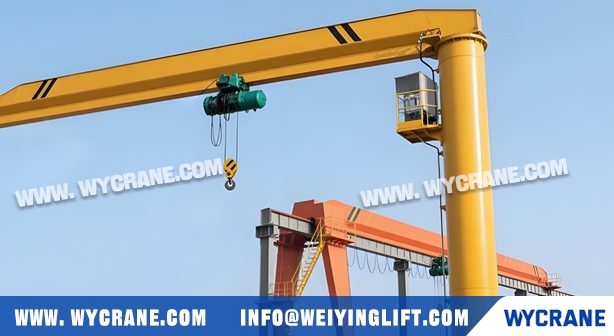
Requesting a quote for a
jib crane seems simple: send an email, state a capacity, get a price. In practice, that approach is why so many buyers end up comparing three quotes for
three different machines — or discovering, after delivery, that the “cheap” crane is missing the rotation drive, the right voltage, or the duty rating their shift actually demands.
This guide organizes everything you need to prepare before contacting suppliers. Each section below covers one specification item, what number the supplier actually needs, and what they’ll specify in return.
Why a Complete RFQ Package Matters
A vague request produces vague pricing. If you ask for “a 2-ton jib crane,” the supplier must assume your arm length, hook height, duty class, voltage, and controls — and different suppliers will assume differently. You then receive three incompatible prices, each quietly excluding different options.
The fix is simple: you’re not asking for a price. You’re inviting three vendors to bid on one identical specification. That requires nine items, listed below.
1. Load — What the Crane Must Lift
Give the supplier your design load, not just the workpiece weight: heaviest workpiece plus lifting device (clamp, spreader, vacuum lifter), and note whether the load is eccentric — the hook position is not always the load’s center.
Also state your routine load if it differs from maximum. Occasionally lifting 1.8 t on a machine that normally runs 600 kg parts may not justify upsizing the whole crane; the supplier can advise.
What you get back: rated capacity plus the load-radius chart, which is the real specification.
2. Working Radius — How Far the Hook Must Reach
List the distances from your planned column position to each of the three working points — load pickup, work position, set-down — measured from the column centerline, with 300–500 mm margin beyond the farthest point. Remember that arm length and working radius are different things, and capacity falls toward the arm tip.
What you get back: the correct arm length class and the allowable capacity at your radius.
3. Lifting Height — Hook Position, Not Building Height
One of the most common RFQ errors: stating the building’s clear height. The supplier needs the hook height at the highest working position — machine table height plus workpiece plus rigging — and the lowest required position.
Working backwards: hook height + hoist body + arm underside determines the arm’s mounting elevation, which must fit inside your building with clearance to trusses and lights. If headroom is tight, a low-headroom hoist may be required — but only if someone flags it now.
4. Rotation Angle — Full Circle or Partial?
State the rotation you actually need: 360° (floor-mounted), 180–200° (wall-mounted), or a custom limited arc. If obstacles intrude into part of the swing circle, say so — the crane can be fitted with mechanical rotation stops that prevent collisions.
Decide here whether rotation should be manual or electric-powered: high-cycle stations and long arms justify electric rotation.
5. Duty — How Often Will It Work?
Tell the supplier: lifts per hour, hours per shift, number of shifts. A crane making 20 lifts a day and one making 500 are entirely different products — motor, brake, and contactor sizing follow the duty class (FEM 1Bm/1Am/2m or ISO M5/M6).
The failure mode of under-specifying duty is predictable: thermal trips, premature brake wear, and the exact overheating problems described in our electric hoist troubleshooting guide. Stating duty honestly is cheaper than replacing brakes annually.
6. Installation Conditions — Where It Will Stand
Match your support type to your building, and send the evidence:
- Floor-mounted: floor type, slab thickness/strength, excavation allowed, underground services.
- Wall/column-mounted: steel or concrete column, section dimensions, structural drawings if available.
- Ceiling-suspended: roof structure load data.
Add photos of the installation area, column spacing, and nearby obstructions. What you get back: the foundation drawing or bracket design you’ll actually build from.
7. Power Supply — The Most Overlooked Line Item
State voltage / phase / frequency and the distance from the supply point to the crane. This matters most for export orders: equipment built for 380 V / 50 Hz / 3-phase will not survive on a 460 V / 60 Hz supply — wrong frequency alone can burn a motor even at “correct” voltage. Also specify hard-wired or plug connection, and whether you need festoon cable or a slip ring for 360° rotation.
8. Control Method — How the Operator Will Run It
Choose:
- Pendant control (standard, economical, cable can snag) or radio remote (flexible, no cable; see our remote-failure troubleshooting notes).
- Two-speed or variable frequency (VFD): for assembly and precise positioning, VFD pays for itself in reduced load swing and shock.
- Rotation drive: manual for low-frequency use, electric for high cycles or long arms.
9. Working Environment — What the Crane Will Face
Run this checklist explicitly:
- Temperature: standard −20 to +40 °C; beyond that, special motors and lubricants.
- Dust/debris: foundries and woodshops need protected components and a cleaning regime.
- Humidity/corrosion: coastal or chemical plants need enhanced coatings or stainless options.
- Explosion risk: oil & gas, paint shops, explosive dust → full ATEX/Ex-certified package — hoist, motor, and controls.
- Cleanroom: pharma/food → stainless tracks, no-grease-drip designs.
- Outdoor: weatherproof hoist, wind rating, surface treatment.
An environment requirement discovered after delivery usually cannot be retrofitted at any reasonable cost.
Optional but Valuable: Details That Speed Up Your Quote
- Certification: CE/ISO marks, or local registration/inspection requirements (essential for export projects)
- Paint color; export packing (seaworthy crates, moisture protection)
- Spare parts package with the first order: brake linings, wire rope, contactors
- Target delivery date and whether installation/commissioning is needed
- Quantity — and your future expansion plans, which improve both pricing and standardization
6 Common RFQ Mistakes That Cost You Money
- Quoting capacity without radius — you get arm-root tonnage that fails at your actual reach.
- Quoting building height instead of hook height — the hook arrives unable to reach the work.
- Not stating duty — a light-duty price applied to heavy-duty shifts.
- Omitting supply voltage/frequency — an expensive motor failure on day one.
- Not mentioning the environment — explosion-proof or corrosion protection can’t be bolted on later.
- “Asking for 2–3 t, either is fine” — vendors quote the top configuration; you pay for capacity you’ll never use.
Copy-Paste RFQ Template
Send this table, filled in, and any competent supplier can price the identical machine:
| # | Item | Your Specification |
| 1 | Capacity (workpiece + lifting device) | e.g. 800 kg + 120 kg clamp |
| 2 | Working radius (from column centerline) | e.g. 4.6 m farthest point |
| 3 | Lifting height (hook at highest position) | e.g. 3.2 m above floor |
| 4 | Rotation angle | e.g. 360° / 180° / limited with stops |
| 5 | Duty (lifts/hour, hours/shift, shifts/day) | e.g. 30/h, 8 h, 2 shifts |
| 6 | Installation type & conditions | e.g. floor-mounted, 200 mm concrete |
| 7 | Power supply | e.g. 400 V / 3 Ph / 50 Hz |
| 8 | Control | e.g. radio remote, VFD, electric rotation |
| 9 | Environment | e.g. coastal, 45 °C, dust |
| 10 | Certification | e.g. CE + local inspection |
| 11 | Quantity & delivery location | e.g. 2 units, FOB Shanghai |
What a Complete RFQ Gets You
Three concrete outcomes: comparable quotes — the price spread between vendors now reflects real differences, not spec drift; no surprise add-ons — the configuration is written down, so the contract is the specification; and reliable lead times — special builds (ATEX, VFD, non-standard voltage) enter production scheduling on day one.
Conclusion
Buying a jib crane is not a price question — it’s a specification question. The nine items above take one working hour to assemble, and they decide everything that follows: whether quotes compare cleanly, whether the crane fits your building and your shift pattern, and whether it arrives certified for your environment. Gather the loads, draw the radius, state the duty, name the voltage, describe the environment. Then request quotes — and let suppliers compete on equal terms.
FAQ
What information do I need to get a jib crane quote?
At minimum: capacity (including lifting device), working radius, lifting height, rotation angle, duty rate, installation type, power supply, control preference, and environment. Our template above covers all nine.
How much does a jib crane cost?
There’s no meaningful single price — cost depends on capacity class, arm length, rotation drive, duty rating, controls, environment protection, and certification. A complete RFQ is precisely how you find out your price.
What is the difference between lifting height and building height?
Building height is the structural clear height of your facility. Lifting height is how high the hook must travel to serve your highest work position — the number the crane is actually built to.
What duty class do I need for my application?
It follows from your real cycle: lifts per hour × hours per shift × shifts. Occasional manual use may suit light classes; continuous production typically needs FEM 1Am or higher. Your supplier converts your numbers into a class.
Do I need explosion-proof equipment for my environment?
If the area has flammable gases, vapors, or combustible dust — paint shops, solvent areas, grain or wood dust zones — yes, and the entire package (hoist, motor, controls) must carry ATEX/Ex certification. State it in the RFQ; it cannot be retrofitted economically.
How long is the lead time for a jib crane?
Standard configurations often ship in 2–4 weeks; special voltage, VFD, ATEX, or non-standard spans extend this. A complete RFQ gets you a committed date instead of an estimate.
About us
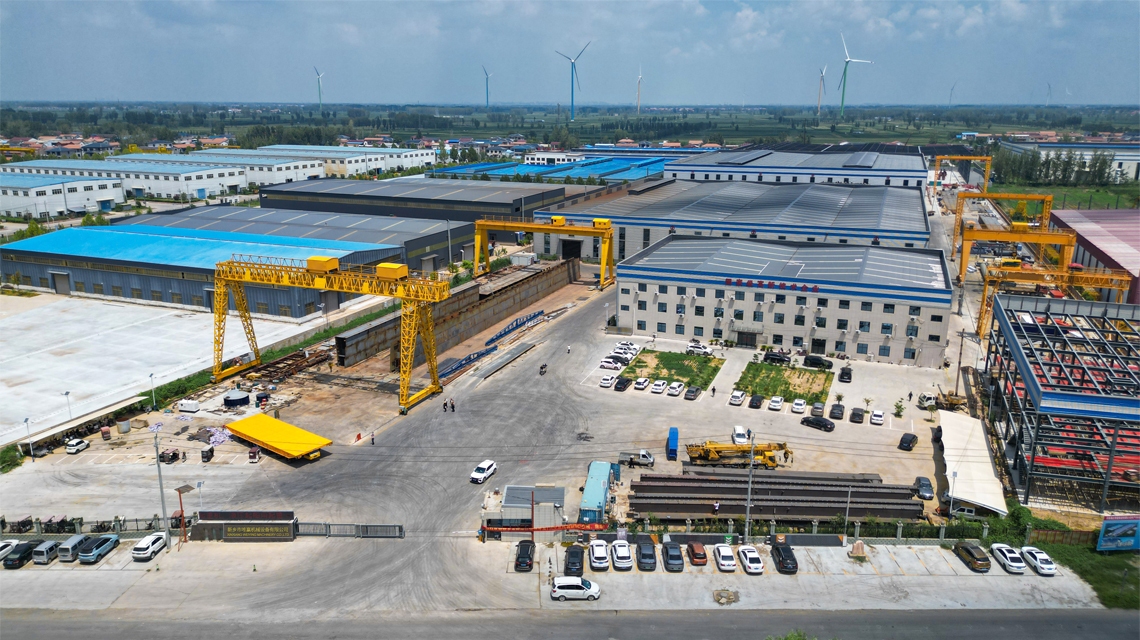
With 34 years of manufacturing experience and 12 years of export expertise, we have built a dual advantage of professional qualifications and a global presence. Our business covers more than 100 countries and regions across Asia, Europe, the Americas, Africa, and Oceania. We are certified under the ISO management system and hold CE product certifications. Our main product lines include six major series—electric hoists, electric winches, gantry cranes, bridge cranes, marine cranes, and portal cranes—comprising nearly 100 different models.
If you want to learn more, please contact us.
E-mail address: info@weiyinglift.com
Website:www.wycrane.com