In today’s fast-evolving industrial landscape, manufacturing companies, logistics centers, and heavy-equipment facilities are under constant pressure to improve efficiency, reduce labor costs, and maintain a safe working environment. As factories scale their production capacity, traditional ground-based handling methods—such as manual handling and forklifts—often become bottlenecks.
This is where the bridge crane, also known as the overhead crane, becomes a transformational investment. Far beyond being a simple lifting tool, a bridge crane is a strategic asset that elevates productivity, enhances workflow, and ensures long-term operational stability.
This article explains why installing a bridge crane is worth it, explores its role in various industries, outlines its advantages in material handling, provides common product options, offers selection recommendations based on different applications, and includes a real industrial case study.
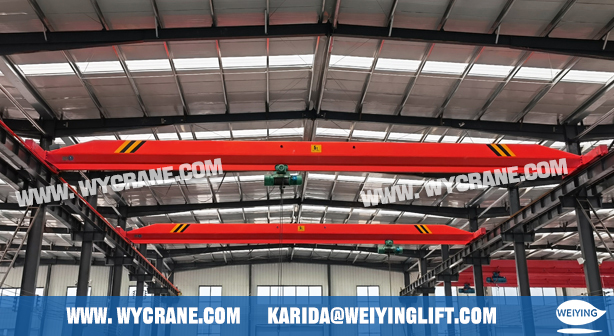
Bridge cranes are widely used across industries because they provide reliable, safe, and efficient lifting in environments where precision and productivity are crucial. Their importance extends to many sectors:
Bridge cranes streamline material movement between machining stations, assembly lines, and storage areas. They are ideal for handling machine parts, molds, fixtures, and semi-finished products.
Key benefits:
In high-temperature and dusty environments, heavy-duty bridge cranes are essential for handling molten metal ladles, steel coils, billets, and ingots. These cranes often run 24/7 under high loads, requiring durable structural and electrical systems.
Bridge cranes help optimize warehouse space by eliminating aisle limitations and maximizing vertical room. They can efficiently move bulky items such as rolls, pallets, or large containers.
Hydropower stations, wind energy plants, transformer factories, and maintenance stations rely on overhead cranes to lift turbines, nuclear components, generators, and large electrical assemblies.
Bridge cranes support precision assembly of engines, chassis, vehicle frames, and ship components—ensuring safe and synchronized production flow.
The benefits of installing a bridge crane go far beyond lifting heavy loads. They fundamentally reshape operational efficiency.
A bridge crane can carry loads directly overhead, making material transfer faster and more direct than forklifts that must navigate around obstacles or narrow pathways.
This results in:
Bridge cranes minimize manual lifting tasks and reduce risks of collisions, tipping, or product damage. Modern cranes include:
Because overhead cranes work completely above floor level, they free up floor space for machines, storage, and workers. This is especially valuable for small or crowded facilities.
Rather than relying on multiple workers or forklifts, one trained operator can handle large loads with precision. This lowers annual labor costs and reduces dependence on manual processes.
Quality bridge cranes can operate for 20–30 years with proper maintenance, providing a high return on investment throughout their lifecycle.
Companies that adopt bridge cranes often experience immediate improvements in workflow. The crane becomes part of a lean manufacturing strategy where materials arrive exactly where and when they are needed.
By ensuring loads move smoothly and accurately, crane installation reduces downtime, accelerates production, and minimizes the risk of human error.
As businesses scale, bridge cranes can be:
This adaptability supports long-term operational growth.
Bridge cranes help users meet global safety requirements including ISO, CE, CMAA, FEM, and OSHA standards—critical for companies exporting finished products.
| Crane Type | Capacity Range | Key Features | Ideal Applications |
| LD Type Single Girder Bridge Crane | 1–20 tons | Low cost Easy installation Lightweight structure Low maintenance |
Workshops, warehouses, assembly stations, material handling areas |
| QD / LH Type Double Girder Bridge Crane | 5–500 tons | Robust double-girder structure Higher lifting height & speed Smooth and stable operation |
Heavy machinery manufacturing, steel structures, fabrication shops, foundries |
| European Standard Overhead Crane | 1–50 tons (typical) | Compact and modern design VFD control for all motions Low headroom & lightweight Energy-efficient, quiet, precise |
Precision assembly, logistics warehouses, modern production lines |
| Explosion-Proof Bridge Crane | 1–50 tons | Explosion-proof motors and electricals Anti-spark design Certified safety protection |
Oil & gas, chemical plants, paint shops, flammable or dusty environments |
| Foundry / Metallurgy Crane | 5–320 tons | Heat-resistant components High-duty cycle Anti-sway and safety redundancy |
Steel mills, foundries, smelting plants, high-temperature operations |
A medium-sized machinery manufacturer in Turkey struggled with production delays due to congested forklift traffic and frequent damage to semi-finished products. Their workshop required daily movement of machine bases weighing 2–8 tons.
Before installing a crane:
After installing a 10-ton European-type single girder bridge crane (22 m span, VFD control):
The factory reported improved order fulfillment times and a more predictable production schedule. The crane paid for itself within two years.
A bridge crane is not just lifting equipment—it is an investment in efficiency, safety, space optimization, and long-term cost savings. Whether your facility handles metal parts, heavy components, large assemblies, or raw materials, the right overhead crane can transform your productivity model.
For industrial operations seeking to scale, modernize, or optimize material flow, installing a bridge crane is one of the wisest strategic decisions.
>5 Ton Overhead Crane: A Comprehensive Guide to Choosing the Right Equipment
>Understanding Overhead Bridge Crane Load Capacity and Why It Matters
>How to Choose a Suitable Supplier for Your Overhead Bridge Crane
>Shop Overhead Crane: How to Choose the Right Crane for Your Workshop
Yes. A bridge crane significantly improves productivity, reduces labor costs, increases safety, and optimizes workshop space. For many industries, the crane pays for itself within 1–3 years due to increased efficiency and lower operational costs.
Key factors include:
Manufacturers typically offer professional site assessments to recommend the best solution.
A single girder crane is cost-effective and ideal for light to medium loads (1–20 tons).
A double girder crane is designed for heavy-duty, high-frequency lifting (5–500 tons), offering higher stability and lifting height.

With 34 years of manufacturing experience and 12 years of export expertise, we have built a dual advantage of professional qualifications and a global presence. Our business covers more than 100 countries and regions across Asia, Europe, the Americas, Africa, and Oceania. We are certified under the ISO management system and hold CE product certifications. Our main product lines include six major series—electric hoists, electric winches, gantry cranes, bridge cranes, marine cranes, and portal cranes—comprising nearly 100 different models.
If you want to learn more, please contact us.
E-mail address: karida@weiyinglift.com
Website: www.wycrane.com